I have toured enough pathology archives to see the same problems repeat themselves. Labs with brilliant pathologists and skilled technicians somehow end up with storage systems that look like they were planned by someone who had never set foot in a histology department. The blocks are there. Finding the right one is another story.
These mistakes do not happen because people are careless. They happen because block storage seems simple until it is not. By the time a lab realizes it has a problem, reorganizing means handling tens of thousands of specimens without disrupting daily operations.
Here are the 5 Common Mistakes When Storing Tissue Paraffin Blocks — and the practical steps that prevent them.
Mistake 1: Underestimating How Fast Volume Grows
A new lab opens with room to spare. Five years later, blocks are stacked in cardboard boxes on top of cabinets, under tables, and in any corner that has space. This is not poor planning. It is predictable arithmetic that nobody did.
A medium-sized pathology department generates between 8,000 and 15,000 tissue blocks per year. With ten-year retention requirements, that is 80,000 to 150,000 blocks sitting in your archive at steady state. Every year adds another year’s worth.
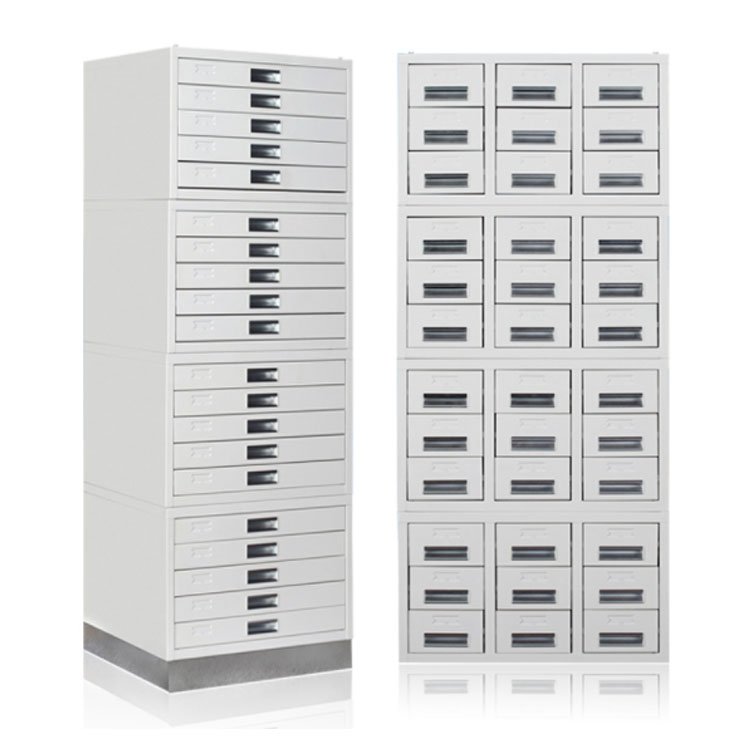
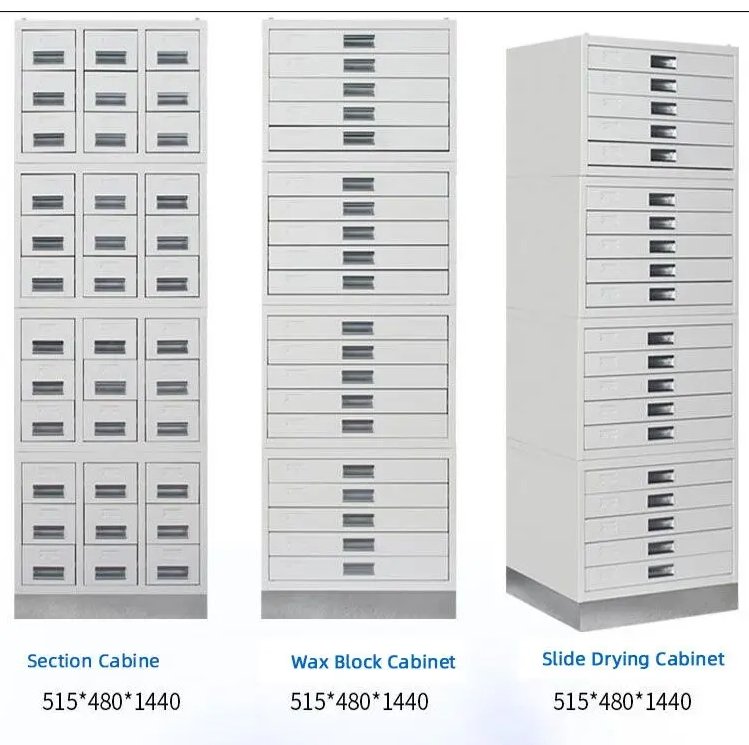
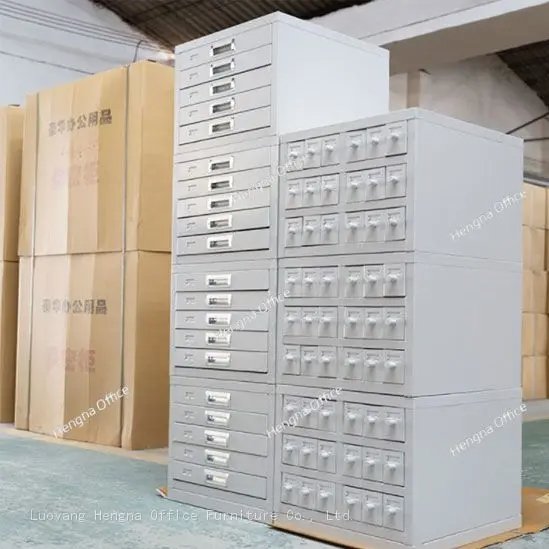
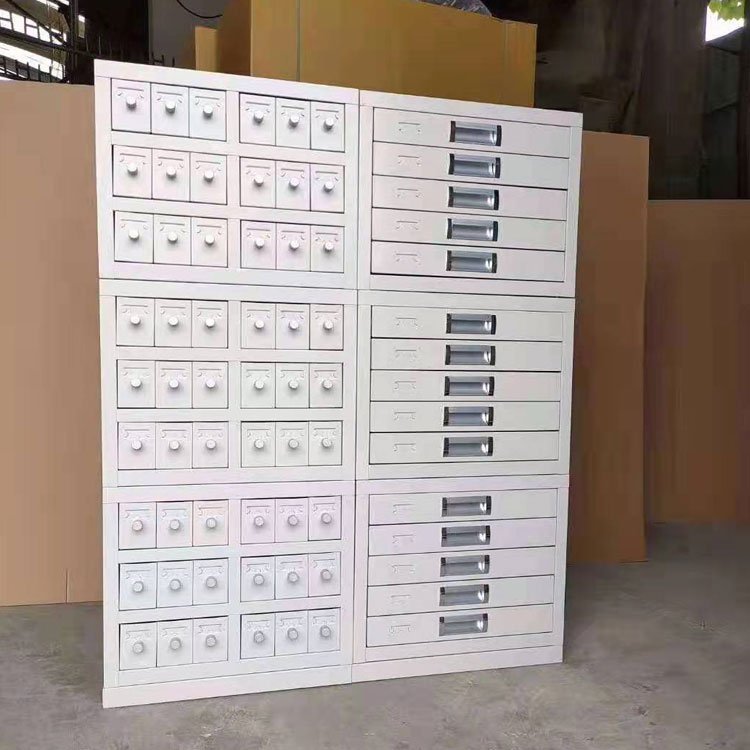
The fix is to calculate your ten-year capacity need before you buy your first cabinet. Then choose a modular system that scales incrementally. A single five-drawer unit measuring 360mm high, 515mm wide, and 480mm deep stores roughly 4,000 blocks. Four units stacked on a base create a full configuration of 1,520mm height with the same footprint, holding approximately 16,000 blocks.
Start with what you need for two years. But make sure your supplier offers matching units so you can expand without mixing incompatible cabinet styles. Nothing says “we grew chaotically” like a storage room with three different cabinet models from two different decades.
Mistake 2: Treating All Storage as Equal
A standard office cabinet is not a tissue block cabinet. I have seen labs try to repurpose filing cabinets, shelving units, and even plastic storage tubs for paraffin blocks. All of them fail for the same reasons.
Office filing cabinets have the wrong drawer dimensions. A standard letter-size drawer is too shallow for blocks arranged in trays. Legal-size drawers waste space. Neither has the weight capacity for dense paraffin wax.
Shelving units expose blocks to dust, light, and temperature fluctuations. They also force technicians to handle blocks individually instead of retrieving entire trays. When you are looking for one block among 4,000, handling trays is infinitely faster than handling single specimens.
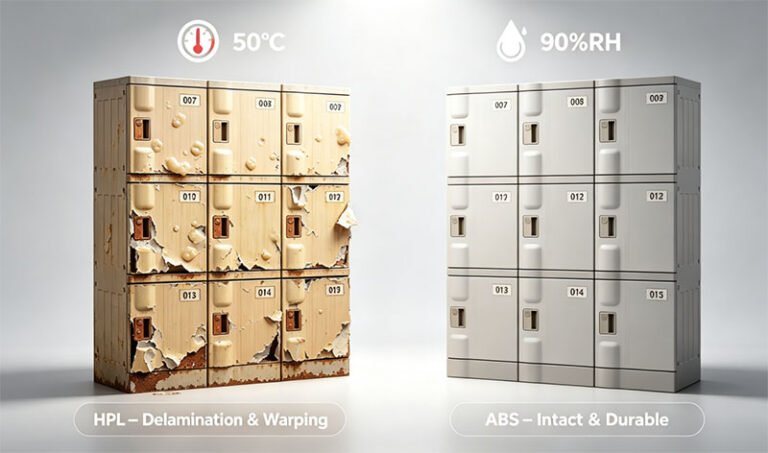
Plastic storage bins seem economical but degrade in laboratory environments. They become brittle, crack under weight, and offer no security. A regulatory inspector will note unsecured specimen storage as a finding.
The right cabinet is purpose-built. Drawers sized for standard block trays. Steel construction that holds weight without sagging. Locking mechanisms that satisfy specimen security requirements. Interchangeable drawers that let you reorganize by year, case type, or any system your lab uses.
Mistake 3: Ignoring Daily Ergonomics
The storage system that looks fine in a catalog becomes a daily frustration when technicians are opening and closing drawers two hundred times per day.
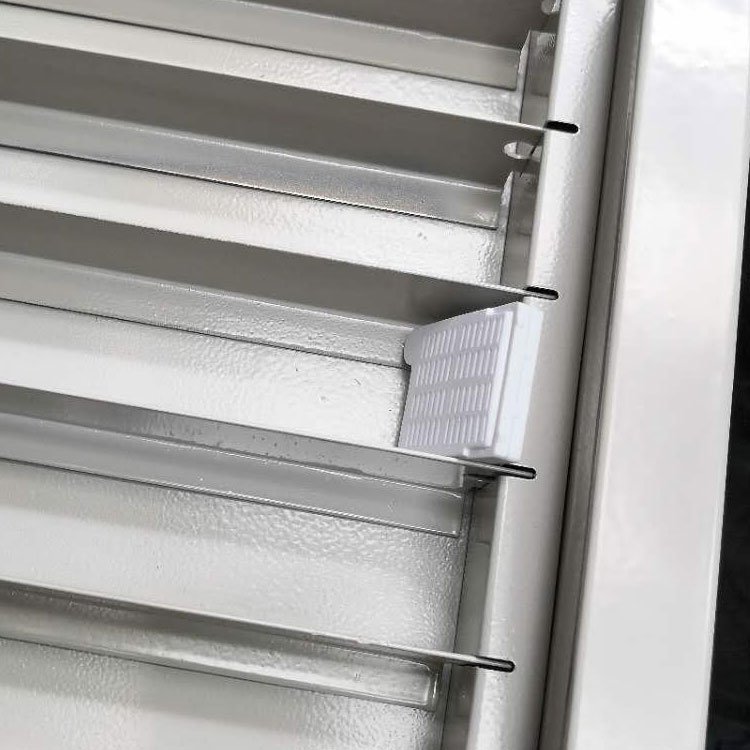
Drawer operation quality determines whether retrieval is smooth or exhausting. Groove-style slide rails with high-strength sliding wheels move fully loaded drawers without sticking. Auto-return positioning keeps drawers aligned drawer after drawer, year after year. Without these features, technicians develop workarounds — leaving drawers partially open, forcing them shut, avoiding certain cabinets entirely.
Noise matters more than administrators realize. In a shared lab space, the sound of twenty drawers slamming shut creates a stressful environment. High-strength shock-absorbing pads at the drawer closure point eliminate this problem entirely. The difference between a quiet cabinet and a noisy one is the difference between a lab where people can concentrate and one where they cannot.
Height also matters. A single unit at 360mm height allows seated access for technicians with mobility limitations. A full four-unit stack at 1,520mm requires standing access but maximizes vertical space. The best labs use a mix — lower units for frequently accessed recent blocks, taller stacks for older archive material.
Mistake 4: Forgetting About Security Until the Inspector Arrives
Tissue blocks contain patient information. In most jurisdictions, they are subject to the same privacy and security rules as medical records. An unsecured cabinet is a compliance violation waiting to be discovered.
The mistake is assuming that a cabinet in a locked room is sufficient. It is not. Individual drawer locks provide accountability — you know who accessed which section because each key holder is documented. A single cabinet lock means anyone with access to the room has access to every block.
Best practice is individual locks on every drawer, with a key management log that tracks who has keys, when they were issued, and when they are returned. This sounds bureaucratic until you need to prove to a regulator that your specimens are properly controlled.
Steel construction with electrostatic spray coating provides additional security benefits. Unlike plastic or wood, steel does not degrade or show obvious signs of tampering. A 0.8mm cold-rolled steel cabinet with proper surface treatment will look the same in year ten as it did in year one, making physical inspection easy and damage obvious.
Mistake 5: Buying Disposable Instead of Durable
The cheapest cabinet on the market has a predictable lifecycle. Year one: it works fine. Year three: drawers start sticking. Year five: the coating peels, rust appears at the edges, and replacement parts are no longer available from the original supplier. Year seven: you are buying a complete replacement.
The total cost of ownership for a cheap cabinet is higher than a quality cabinet, but the expense is hidden in replacement cycles, technician frustration, and disrupted workflows.
What separates durable cabinets from disposable ones:
- 0.8mm cold-rolled steel plate construction: Thin steel warps. Thick steel adds unnecessary weight. This thickness hits the balance.
- Electrostatic spray coating with anti-rust treatment: The difference between a cabinet that lasts five years and one that lasts fifteen is usually in the coating, not the steel.
- Replaceable components: Drawer slides, locks, and handles should be available as spare parts. Ask your supplier before ordering.
- Interchangeable drawers: This feature becomes essential when your filing system evolves. Being able to reorganize by moving entire drawers instead of re-filing thousands of blocks saves weeks of labor.
Building a Storage System That Lasts
The labs that avoid these five mistakes share one characteristic: they think about storage as infrastructure, not furniture. They plan for ten years of growth. They buy systems that technicians can use comfortably every day. They satisfy regulators before inspectors arrive. And they choose durability over the lowest upfront price.
A well-chosen tissue paraffin block storage system — built from quality materials, designed for real laboratory workflows, and planned for long-term expansion — pays for itself in reduced replacement costs, improved technician productivity, and stress-free compliance inspections.
About the Author: We design and manufacture laboratory storage equipment for pathology and histology departments. Our paraffin block cabinets are built from 0.8mm cold-rolled steel with modular drawer systems, installed in hospital labs across Asia, Europe, and the Middle East.