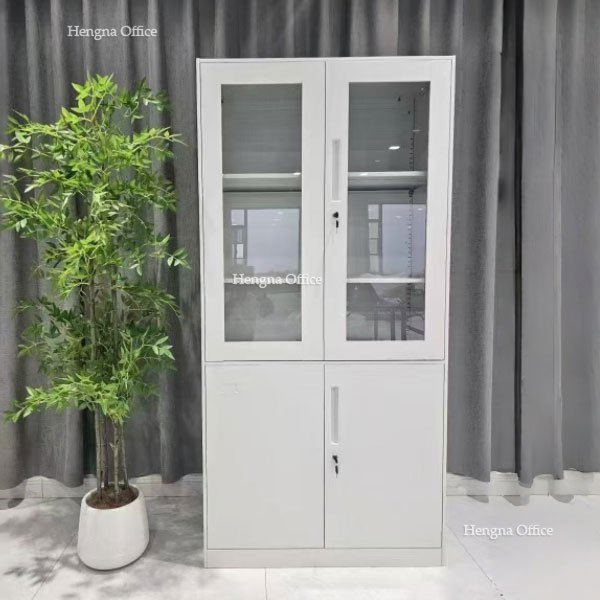
I was in a procurement review meeting last year when a hospital administrator asked a question that stopped the room: “Why can we not just use the same metal cabinets we bought for the pharmacy? They are half the price.”
The pathology supervisor took a breath and explained — politely, patiently — that storing tissue paraffin blocks is not the same as storing bottles of saline solution. The administrator meant well. He was looking at a budget spreadsheet. But the question reveals a common misconception: that storage is generic, and the cheapest metal box will do.
It will not. This article explains the specific differences between a purpose-built paraffin block storage cabinet and a standard laboratory cabinet. If you are a pathology manager defending your equipment budget, print this out and bring it to your next meeting.
Drawer Dimensions and Internal Layout
A standard lab cabinet is designed for bottles, boxes, or loose equipment. Its drawers are sized for general storage — deep enough for a centrifuge tube rack, wide enough for a stack of petri dishes. These dimensions do not align with paraffin block trays.
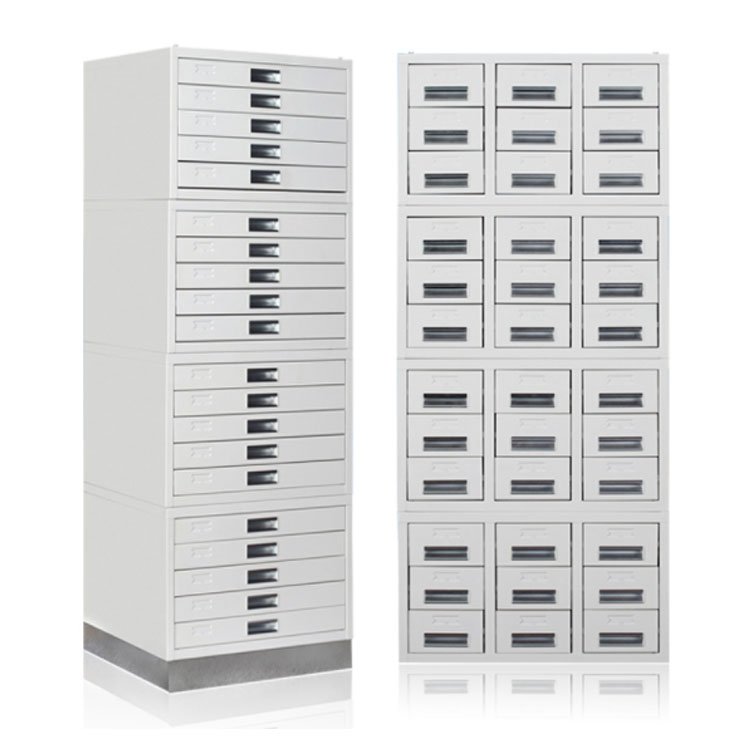
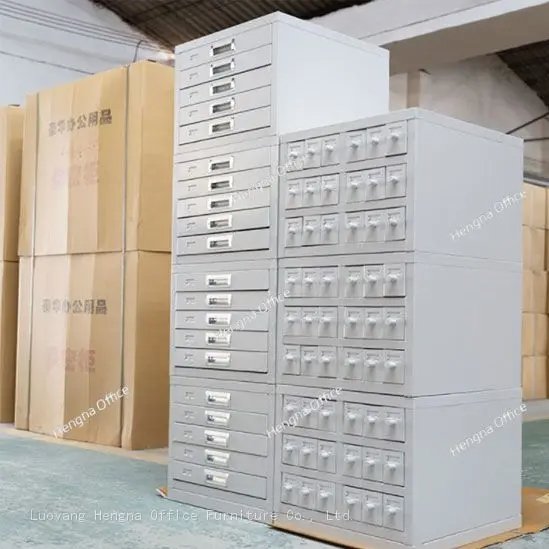
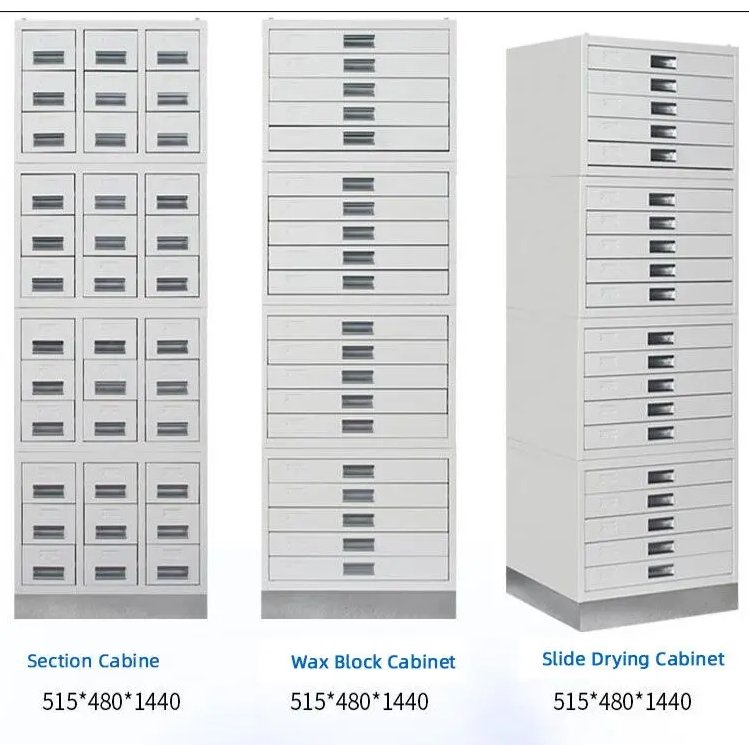
A purpose-built paraffin block cabinet is designed around standard block dimensions. Each drawer is sized to hold block trays efficiently, with minimal wasted space. The five-drawer unit we manufacture, measuring 360mm in height, 515mm in width, and 480mm in depth, stores approximately 4,000 blocks because every millimeter of drawer space is optimized for this single purpose.
Standard cabinets force you to adapt your organization to the drawer. Purpose-built cabinets adapt to your workflow. That difference becomes significant when your technicians are retrieving blocks under time pressure during a busy surgical pathology day.
Weight Capacity and Structural Integrity
Paraffin blocks are small but dense. Four thousand blocks in a single five-drawer unit creates a concentrated load that most standard cabinets are not engineered to handle.
Standard lab cabinets typically use thinner steel — 0.5mm to 0.6mm in many cases. This is adequate for bottles and supplies. It is not adequate for thousands of wax blocks. Over time, thinner steel drawers sag, rails warp, and alignment drifts. The drawer that slid smoothly in year one starts sticking in year three.
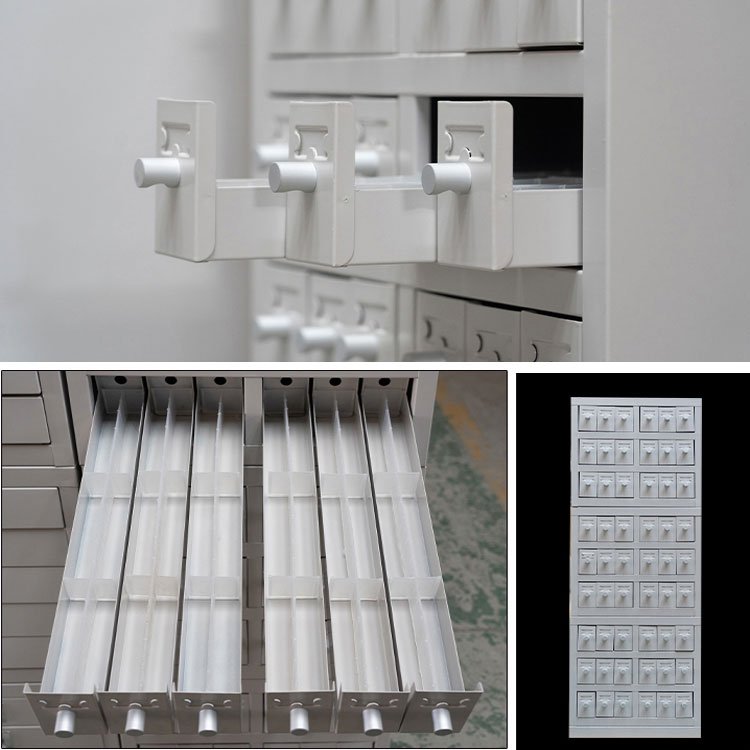
Purpose-built block cabinets use 0.8mm cold-rolled steel plate. This thickness provides the rigidity to maintain drawer alignment under full load for years. Combined with groove-style slide rails and high-strength sliding wheels, the drawer mechanism tolerates daily heavy use without degradation.
The structural difference is not visible in a catalog photo. It becomes obvious in year five, when a standard cabinet needs replacement and a purpose-built cabinet still operates smoothly.
Surface Treatment and Environmental Resistance
Laboratory environments are harsh on equipment. Humidity, temperature swings, and chemical exposure all accelerate degradation.
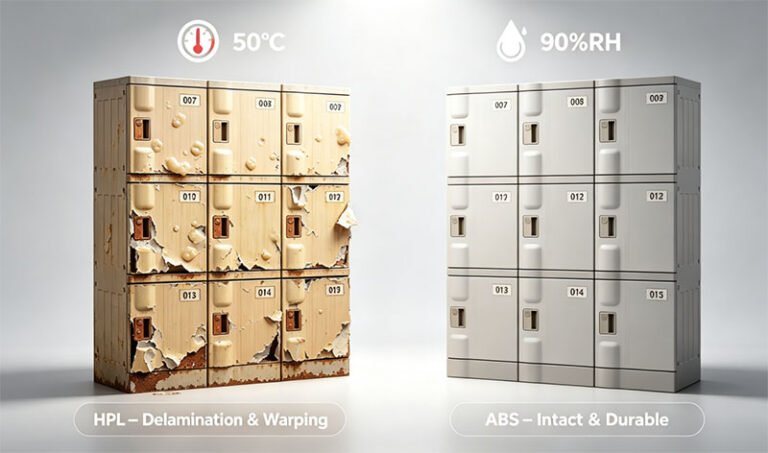
Standard cabinets may use basic paint or thin powder coating. In a climate-controlled office, this is fine. In a hospital basement lab with variable humidity, it is not. Rust forms at seams and edges. Paint chips. The cabinet starts looking unprofessional — which matters when inspectors are walking through.
Purpose-built block cabinets use electrostatic spray coating with anti-rust treatment on 0.8mm cold-rolled steel. This combination resists the humid conditions common in Asian and Middle Eastern hospital labs. The matte white finish shows dust and residue so cleaning is obvious and regular. It also reflects light in dim archive rooms, making block retrieval easier.
The coating difference is not cosmetic. It is the difference between a cabinet that lasts five years and one that lasts fifteen.
Drawer Operation and Daily Workflow
The drawer mechanism is where purpose-built and standard cabinets diverge most obviously in daily use.
Standard cabinets typically use simple metal slides or basic roller mechanisms. These work for light loads. Under the weight of a full tray of paraffin blocks, they bind, squeak, and eventually fail.
Purpose-built block cabinets use groove-style slide rails with high-strength sliding wheels. This design distributes weight evenly, maintains alignment, and operates smoothly even when drawers are fully loaded. Auto-return positioning ensures that drawers close squarely every time, preventing the gradual misalignment that ruins standard cabinets.
High-strength shock-absorbing pads where the drawer meets the cabinet frame reduce noise and impact damage. In a lab where technicians open and close drawers hundreds of times per day, this feature extends cabinet life and reduces workplace noise significantly.
Modularity and Future Expansion
Standard cabinets are fixed configurations. What you buy is what you have. If your archive grows, you buy another cabinet and hope it fits in the available space.
Purpose-built block cabinets use modular design. A single unit at 360mm height can stand alone, stack under a workbench, or combine with other units. Four units plus a base create a full configuration of 1,520mm height, 515mm width, and 480mm depth, storing approximately 16,000 blocks. The footprint stays consistent as capacity grows.
Interchangeable drawers add another layer of flexibility. When your filing system changes — from chronological to case-type organization, for example — you move entire drawers instead of re-filing thousands of blocks. Standard cabinets do not offer this option.
Paraffin Block Storage Cabinet vs. Standard Lab Cabinet The Real Cost Comparison
On a spreadsheet, a standard lab cabinet looks cheaper. It is not.
Factor in replacement cost at year five when the thin steel warps and drawers fail. Factor in technician time lost to stuck drawers and disorganized storage. Factor in the compliance risk of unsecured specimen storage. Factor in the disruption of reorganizing an archive because your cabinet system cannot adapt.
The purpose-built paraffin block cabinet costs more upfront. It costs less over its useful life. And it does the one thing a standard cabinet cannot: it keeps your pathology archive organized, secure, and inspection-ready for a decade or more.
Recommendation for Pathology Managers
When defending your equipment budget, focus on total cost of ownership, not purchase price. Bring photos of failed standard cabinets from other departments. Show the inspector checklist that requires locked specimen storage. Calculate the labor cost of reorganizing blocks because a cabinet system is not modular.
The administrators reviewing your request want to control costs. Give them the data to see that the purpose-built option is the genuinely economical choice.
About the Author: We manufacture purpose-built laboratory storage systems for pathology and histology departments. Our paraffin block cabinets feature cold-rolled steel construction, modular drawer systems, and individual drawer locks, installed in hospital labs worldwide.