In the realm of global infrastructure and large-scale industrial development, the logistics of human capital are as critical as the engineering of the structures themselves. Whether it is a remote mining site, a massive renewable energy plant, or a high-density urban construction project, the quality of workforce accommodations directly impacts project timelines, employee retention, and overall safety records.
Central to these accommodations is the heavy-duty metal bunk bed. While it may seem like a simple piece of furniture, in a 24/7 operational environment where multi-shift rotations are the norm, the bunk bed becomes a critical infrastructure component. A failure in structural integrity or a lack of safety features can lead to workplace injuries, increased insurance premiums, and costly maintenance cycles.
For procurement officers and facility managers, selecting the right sleeping solution requires a balance of durability, safety, and cost-efficiency. Below are the top 5 safety features you must prioritize when sourcing metal bunk beds for large-scale projects.
1. Heavy-Duty Metal Bunk Beds The “Safety Wall”: 300mm Extra-High Guardrails
In dormitory safety, height is the first line of defense. Standard retail bunk beds often offer guardrails of 150mm to 200mm, which might suffice for children but are dangerously inadequate for adult workers in a professional setting.
- The Hidden Risk: Modern industrial mattresses are typically 10cm to 15cm thick to ensure adequate support for hardworking personnel. On a standard bed, this leaves only a few centimeters of protective railing—essentially rendering the guardrail useless if a sleeper shifts during the night.
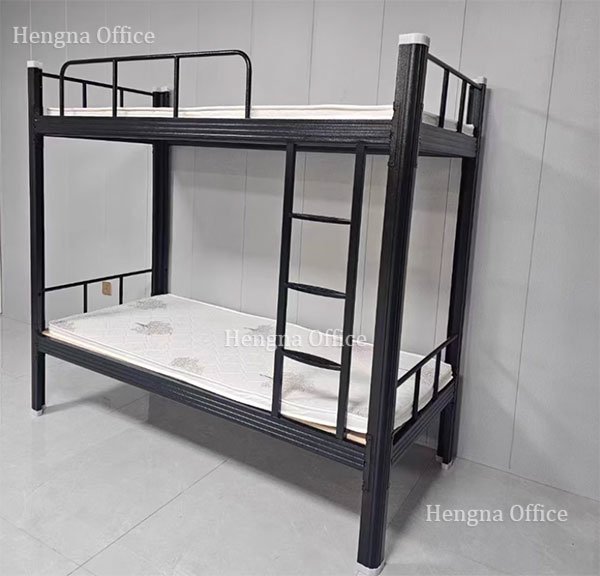
- The Professional Standard: A 300mm extra-high guardrail is the gold standard for large-scale projects. This ensures that even with a premium mattress, there remains a substantial 15cm to 20cm vertical barrier. For workers returning from grueling 12-hour shifts, this “safety wall” prevents accidental falls that could result in fractures or head injuries—liabilities that no project manager wants to encounter.
2. The Gravity-Lock: Boltless “Snap-In” Structure
One of the most significant advancements in industrial furniture is the transition from traditional bolted frames to boltless “snap-in” (U-structure) designs.
In high-traffic dormitories, beds are subject to constant movement. Traditional bolts and nuts are a “ticking time bomb” for maintenance teams; in a vibration-heavy environment, screws inevitably loosen. This creates a “sway effect” that leads to structural fatigue and metal-on-metal friction.
- Engineering Excellence: The boltless U-structure utilizes tapered hooks that slide into precision-engineered slots on the columns.
- Self-Tightening Mechanism: This design leverages physics to its advantage. The more weight applied to the bed, the tighter the joint becomes. This Zero-Wobble architecture ensures the frame remains rigid and silent for years.
- Operational Efficiency: From a procurement standpoint, boltless beds reduce assembly time by up to 60%. A team can assemble a room in minutes without specialized tools, significantly lowering the “Total Cost of Ownership” (TCO).
3. Structural Integrity: Reinforced Cold-Rolled Steel (SPCC)
Large-scale projects often involve a diverse international workforce with varying physical statures. Therefore, a bed designed for a project dormitory must be “over-engineered” for maximum load-bearing capacity.
| Feature | Standard Commercial Bed | Heavy-Duty Project Grade |
| Material Thickness | 0.6mm – 0.8mm Steel | 1.0mm – 1.2mm Cold-Rolled Steel |
| Static Load Capacity | 150kg per berth | 400kg+ per berth |
| Column Profile | Simple Square/Round Pipe | Reinforced Textured Profile |
| Surface Finish | Basic Paint | Electrostatic Powder Coating |
Using Cold-Rolled Steel (SPCC) is non-negotiable for high-performance environments. Unlike hot-rolled steel, SPCC undergoes a cooling process at room temperature, which increases its hardness and tensile strength. This ensures the columns (often 1.0mm to 1.2mm thick) won’t buckle or bend under the stress of 24/7 multi-shift usage.
4. Ergonomic Non-Slip Ladders with Enhanced Treads
The ladder is statistically the most frequent point of injury in bunk bed usage. Many budget models use thin, round rungs that are not only painful for the feet but also dangerously slippery, especially if a worker is wearing socks or is fatigued.
- Wider Treads: Look for beds featuring flat, wide steps (ideally 5cm to 8cm wide). This distributes weight across the foot and provides a stable platform.
- Anti-Slip Texture: The steps should feature a stamped “diamond” or “ribbed” pattern to ensure traction.
- Integrated Safety: In the best designs, the ladder is an integrated part of the structural frame or is securely hooked into the snap-in system, preventing it from detaching or wobbling during ascent.
5. Electrostatic Powder Coating: Fire, Health, and Hygiene
In remote project sites—ranging from humid coastal regions to arid deserts—the environment can be brutal on metal furniture. Corrosion is more than an aesthetic issue; it is a structural threat.
- Corrosion Resistance: High-quality Electrostatic Powder Coating creates a non-porous, hard finish that protects the steel from salt air and humidity.
- Fire Safety: Unlike wooden beds or oil-based paints, powder-coated steel is non-combustible. In high-density housing, these materials do not contribute to the spread of flame, providing critical extra minutes for emergency evacuations.
- Pest and Hygiene Control: Bed bug infestations are a nightmare for camp managers. A smooth, fully-coated metal surface leaves no organic material or cracks for pests to hide. Furthermore, metal is easily sanitized with industrial-grade cleaners, ensuring a hygienic environment that prevents the spread of illness among the workforce.
Beyond Safety: Maximizing Space with Integrated Storage
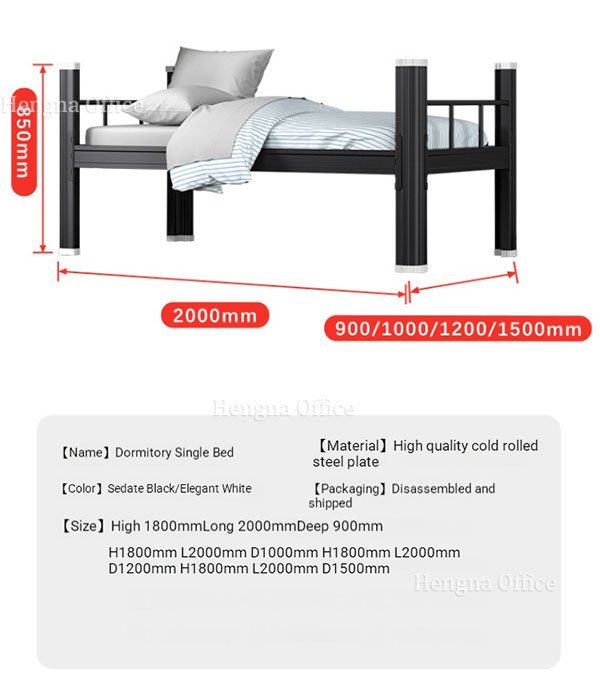
When dealing with modular housing or container-based accommodations, space is at a premium. The most efficient models, such as the L2000W900H1800mm units, often include under-bed cabinets.
These lockable storage units provide workers with a secure space for personal belongings, which is essential for morale in communal living. By integrating storage directly into the bed’s footprint, project managers can increase “occupancy density” without sacrificing the comfort or safety of the staff.
FAQ: Procurement for Large-Scale Projects
Q: Why is the initial investment in boltless beds higher than bolted options?
A: The “low price” of bolted beds is an illusion. When you calculate the labor cost of assembly (30 mins vs. 10 mins) and the ongoing cost of monthly “tightening walks” by maintenance staff, the boltless system pays for itself within the first year of operation.
Q: Can these beds be customized for modular container dimensions?
A: Absolutely. Professional manufacturers specializing in OEM/ODM services can adjust the length (e.g., 1900mm to 2000mm) and width to fit the exact specifications of modular housing units, ensuring there is no “dead space” in the room layout.
Q: How does the “Flat-Pack” shipping method affect safety?
A: Flat-packing does not compromise safety; it optimizes logistics. By precision-engineering components to fit flat, we reduce shipping volume, which significantly lowers sea freight costs for international projects while ensuring that every safety feature (like the 300mm guardrail) arrives in perfect condition.
Investing in Workforce Resilience
Equipping a dormitory for a major industrial project is a strategic decision. By prioritizing 300mm guardrails, boltless “gravity-lock” structures, and high-load cold-rolled steel profiles, you are doing more than just buying furniture—you are investing in the health, safety, and productivity of your most valuable asset: your people.
In the demanding environments of modern mega-projects, where maintenance resources are slim and deadlines are absolute, a “Zero-Maintenance” and “Safety-First” approach is the only sustainable strategy.
Are you planning a large-scale housing project? Contact our engineering team today for a customized dormitory layout and a quote on our heavy-duty industrial bunk bed series.