The industrial workspace design is undergoing a massive transformation in 2026. Gone are the days when a workshop was just a collection of heavy tables and cluttered toolboxes. Today, the focus has shifted toward integrated industrial ecosystems. For facility managers and business owners, the goal is clear: maximize every square inch of the floor while boosting worker efficiency.
Whether you are designing a high-tech electronics lab or a heavy-duty automotive bay, staying ahead of workspace design trends is essential. Let’s explore how the integration of power, light, and storage is redefining the modern industrial workstation.
1. Industrial Workspace Design: The Death of the “Standard” Table: The Rise of Integrated Systems
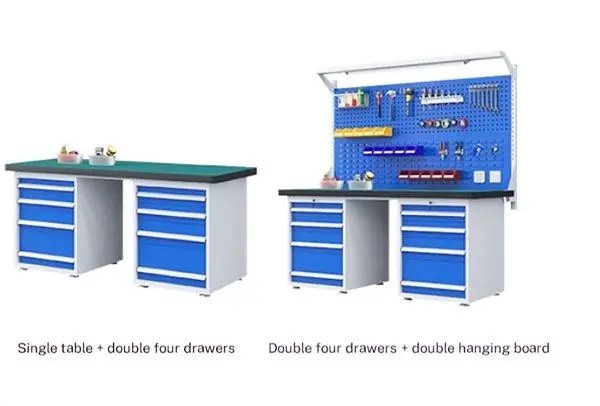
In the past, power strips, desk lamps, and tool chests were purchased separately and “bolted on” to a workbench. This led to messy wiring, inconsistent lighting, and wasted time. The top trend today is Seamless Integration.
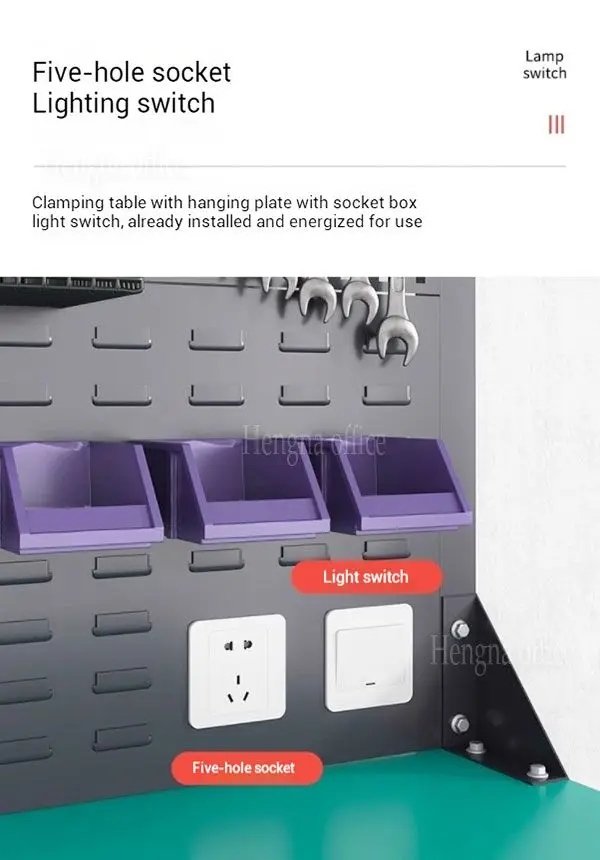
A modern heavy duty workbench is now designed as an all-in-one unit. By building power outlets and lighting frames directly into the steel structure, we eliminate the “clutter friction” that slows down production lines. When everything has a dedicated, powered home, the worker can focus entirely on the task at hand.
2. Strategic Lighting: From General Illumination to Task-Specific Precision
Ambient ceiling lights are no longer enough. Precision engineering and quality control require localized, high-intensity light.
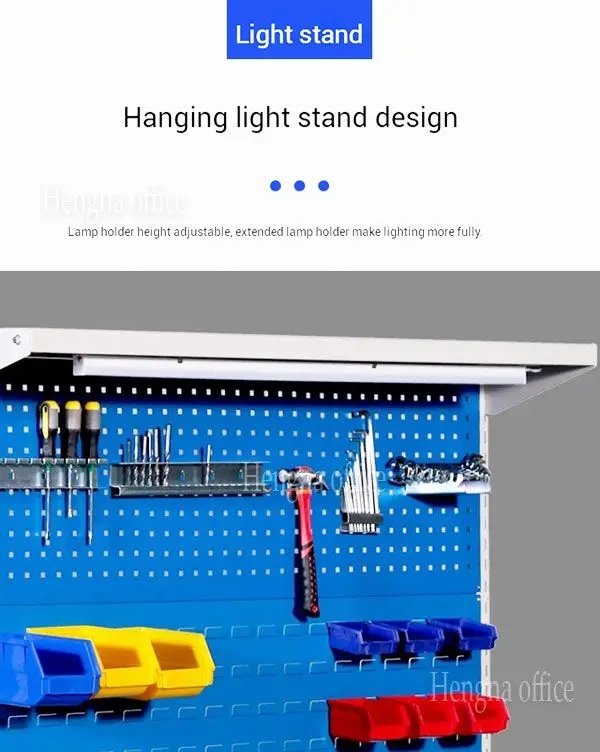
- Shadow-Free Environments: Trends are moving toward overhead light frames that use high-CRI LEDs. These systems mimic natural daylight, reducing eye strain and allowing technicians to spot micro-defects that would be invisible under standard factory lights.
- Directional Adjustability: Modern designs allow the light source to be angled or dimmed based on the specific project, a feature particularly valued in industrial laboratory workbenches.
3. Verticality: Why “Up” is the New “Out”
Real estate is expensive. Factories can no longer afford wide, sprawling benches that eat up floor space. The solution? Vertical Storage Integration.
By utilizing the space above the work surface with modular pegboards and shelving, a 72-inch workbench can offer the same storage capacity as a 10-foot traditional table.
- Square-Hole Pegboards: Allow for a “cockpit” layout where every tool is within a 45cm reach.
- Louvered Panels: Perfect for hanging plastic bins to organize small hardware like screws and capacitors.
4. Comparison: Traditional vs. Integrated Workspace Design
| Feature | Traditional Workshop Setup | 2026 Integrated Design Trend |
| Power Management | Tangled extension cords | Built-in hidden power strips |
| Lighting | Static ceiling lights | Adjustable overhead LED frames |
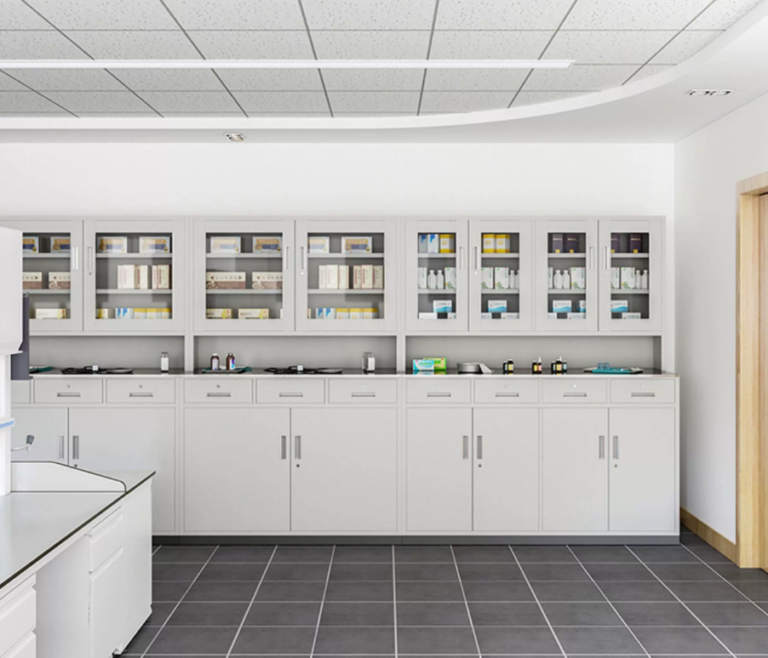
| Storage | Separate floor cabinets | Vertical pegboards & integrated drawers |
| Flexibility | Fixed, heavy furniture | Modular, scalable components |
| Safety | Trip hazards from cables | Clean, wire-free workstations |
| Efficiency | High “walking time” to tools | Everything within the “Golden Reach” |
5. Smart Power Distribution: Ready for the Electric Era
With the explosion of cordless power tools and diagnostic tablets, a workbench in 2026 must act as a charging hub.
High-quality heavy duty metal workbenches now feature industrial-grade power rails with built-in surge protection. This isn’t just about convenience; it’s about longevity. Protecting expensive diagnostic equipment from power spikes in a factory environment is a top priority for B2B sourcing managers.
6. Ergonomics: The Invisible Trend
While power and light are visible, ergonomics is the trend you feel. A workstation that integrates power and storage at the correct height reduces the physical “tax” on the worker.
Integrated designs allow for Adjustable Height Workbenches to maintain their power and light connections even as the table moves up or down. This ensures that whether the technician is sitting for precision soldering or standing for heavy assembly, their environment remains optimized.
7. Material Innovation: Beyond Raw Steel
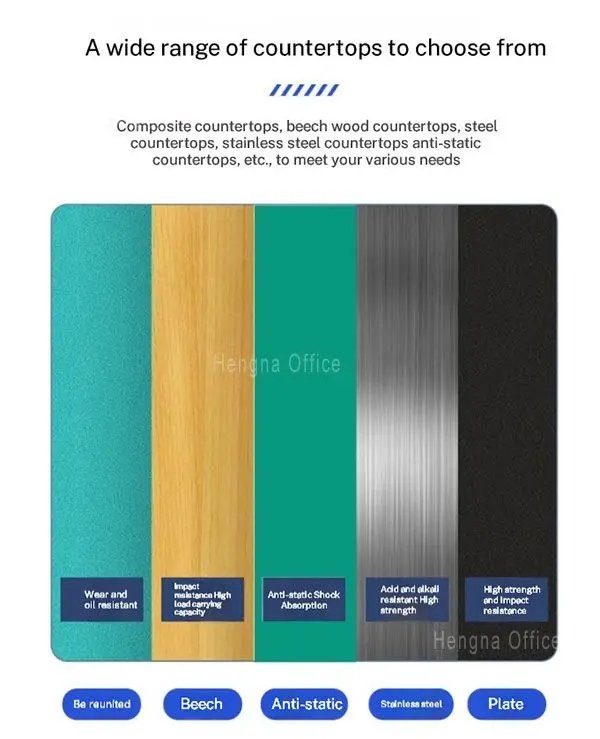
While the frame remains heavy duty steel, the trend in surfaces is diversifying.
- Anti-Static (ESD) Surfaces: Essential for the booming semiconductor and EV battery industries.
- Chemical-Resistant Coatings: As industries move toward greener but more complex chemical cleaners, the anti-corrosion powder coating on the bench frame must be lab-tested for durability.
8. Why B2B Buyers are Moving Toward Factory-Direct Systems
The final trend isn’t about design, but about sourcing. Procurement officers are increasingly bypassing “middle-man” retailers to work directly with China manufacturers like HENGNA. This allows for:
- Customization: Designing a workstation that fits the exact dimensions of a specific assembly line.
- Consistency: Ensuring that 500 workstations across a global facility have identical power and light configurations.
- Cost-Efficiency: Allocating the budget toward higher-grade materials (like 2.0mm steel) rather than retail markups.
Conclusion: The Future of Productivity
The integration of power, light, and storage is not just an aesthetic choice; it is an economic one. A well-designed industrial workstation reduces errors, prevents injuries, and speeds up cycle times. As we move through 2026, the “smart” factory will be built on a foundation of integrated, heavy-duty infrastructure.
Investing in these trends today ensures that your facility remains competitive, organized, and—most importantly—ready for the next decade of industrial evolution.
Frequently Asked Questions
How do I integrate power outlets into industrial workbenches?
Industrial workbenches can be equipped with integrated power strips mounted to the back panel or underside of the work surface. We offer 4-hole, 6-hole, and 8-hole power strip configurations with 220V/110V outlets, USB charging ports, and Ethernet jacks. The power strips are recessed to prevent damage from tools and materials. For welding stations, we recommend isolated power circuits with ground fault protection.
What lighting options work best for industrial workspaces?
LED task lighting is the standard for industrial workbenches. We offer adjustable arm lamps (5000K daylight temperature) that mount to the bench frame or pegboard. For assembly work requiring high visibility, we recommend 1000-lumen LED strips mounted under overhead shelves. The key is layered lighting: ambient overhead lighting (300 lux minimum) plus task lighting (500-1000 lux at work surface). For precision work like electronics assembly, magnifying lamps with 5x-10x zoom are available.
How should I organize tool storage in a lean manufacturing workspace?
Follow the 5S methodology: Sort (remove unnecessary tools), Set in Order (assign specific locations), Shine (clean daily), Standardize (document locations), Sustain (audit weekly). For tool storage, use shadow boards (pegboard with tool outlines) so missing tools are immediately visible. Place frequently used tools within arm’s reach (the “golden zone” between waist and shoulder height). Store heavy items at waist level, light items overhead. Mobile tool carts bring tools to the work area for flexible layouts.
What are the space requirements for industrial workbenches?
Standard workbench depth is 750mm (30 inches) for assembly work, 600mm (24 inches) for light duty. Width ranges from 1200mm to 2400mm depending on the task. Allow 900mm (36 inches) of clearance on all sides for worker movement. For back-to-back bench arrangements, allow 1500mm (60 inches) between benches for material handling. The total workspace per worker should be at least 3 square meters (32 square feet) including storage and movement area.