Choosing the right barcode electronic storage cabinet for your facility is a decision that goes far beyond just comparing prices and appearances. As a discerning decision-maker, you need to evaluate the technical specifications and industry standards behind each product. After all, every small detail—whether it’s the crisp sound of the locking mechanism or the clarity of the barcode label—is the result of meticulous design and manufacturing standards.
In this article, we’ll act as your technical consultant, offering a comprehensive guide on how to assess a high-quality, durable barcode electronic storage cabinet based on seven key, observable, and verifiable dimensions. These dimensions will help you make the best decision for your facility, ensuring that you not only get the right product but also the best return on investment.
Dimension 1: Assess the Reliability and Adaptability of the Barcode System
The barcode system is at the heart of the user experience, and its reliability is critical to ensuring the storage cabinet functions effectively.
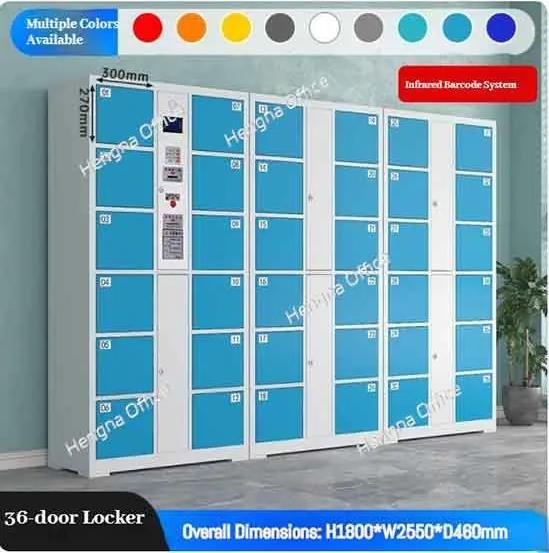
Key Features to Verify: A reliable barcode system should promise features like “tear-resistant” and “scratch-resistant” barcode labels, as well as “quick recognition.” Leading models often boast infrared barcode systems designed to handle barcode wear and provide high-precision recognition. This is a key selling point that can make a significant difference in busy, high-traffic environments.
How to Test in Practice: During sample testing, gently rub the edges of the barcode label and then scan it. Does the system still recognize the barcode accurately? If the product claims to be “scratch-resistant,” you should test this claim for yourself. Such tests ensure that the barcode system performs as advertised.
Scene Matching: Different environments require different capabilities. In gyms or swimming pools, where cabinets are frequently accessed, “quick recognition” is crucial. In libraries or offices, however, durability—particularly in terms of “tear resistance”—is far more important. Make sure the product you choose matches the demands of the specific environments in which it will be used.
Dimension 2: Examine the Completeness of the Core Functional Architecture
The core functional architecture of a storage cabinet should be well-balanced and comprehensive. A high-quality product doesn’t just focus on one or two features but integrates a range of functionalities to enhance overall performance.
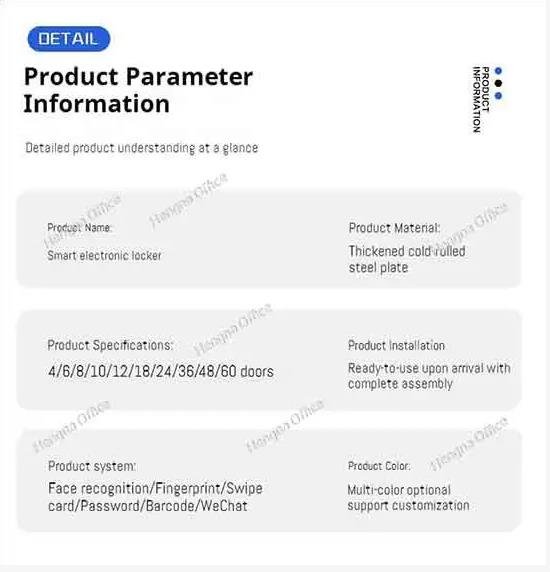
Core Features Checklist: A high-quality barcode electronic storage cabinet should incorporate features like sturdy construction (thick panels), safety mechanisms, environmentally friendly materials, flexible configuration options, smart systems, user-friendly operation, and customization services. These elements form the foundation of a robust and efficient system.
Evaluation Method: When assessing a product, compare it against this checklist. If the product emphasizes its low price but cannot clearly explain its design in areas such as safety, smart management, or environmental friendliness, it’s a red flag. A product that offers “health and eco-friendly” materials and “customization” options typically focuses on long-term user experience and the overall value it offers. This kind of design is reflective of a well-thought-out product.
Dimension 3: Check the Physical Structure and Large-Capacity Design
The physical structure of the cabinet is fundamental to its durability and security. A strong, well-built cabinet ensures the safety of items stored within, making this an essential factor in your evaluation process.
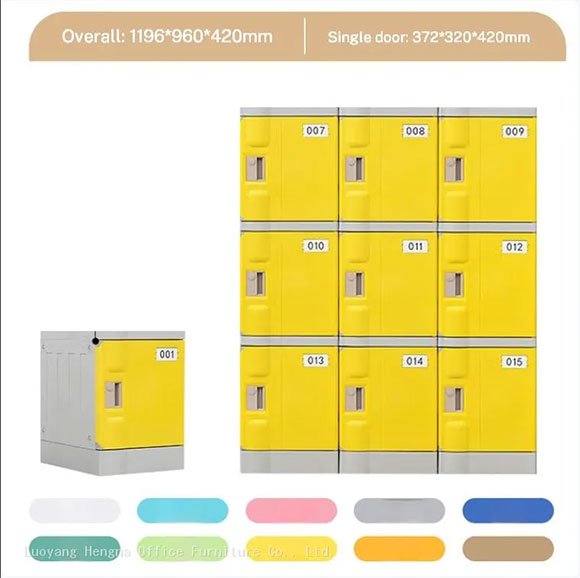
Key Considerations: Look for products that advertise a “large-capacity design.” This doesn’t just refer to the internal storage space but also to how the cabinet optimizes space to make storage more convenient and accessible. In high-traffic environments, maximizing storage space while keeping it organized is essential.
Locking Mechanism: Safety is paramount in any storage system. Be sure to choose a product that specifies features like “electronic locks with top locking rods” and “automatic locking when power is cut off.” These features are essential for protecting stored items in emergencies. It’s important to ensure that the product meets these minimum security standards.
Dimension 4: Investigate the System’s Scalability and Combination Capabilities
For growing businesses, scalability is a key concern. Your storage needs may evolve, and it’s important to choose a cabinet system that can expand alongside your facility’s requirements.
Key Features: Look for systems that support “main and sub-cabinet combinations” using the same management system. This allows you to start with a single main cabinet and, as your needs grow, seamlessly add sub-cabinets without replacing the entire system. This flexibility can save you significant long-term costs and simplify the process of scaling up.
Verification Method: Ask the supplier how the main and sub-cabinets connect. Request a demonstration to verify that the system is easy to manage and that it can be expanded smoothly without any issues. The ability to scale is an important long-term benefit that should not be overlooked.
Dimension 5: Balance Security and Recognition Performance
A high-quality barcode electronic storage cabinet strikes a balance between ease of use and security. A great product should not only make the storage and retrieval process simple but also ensure that it does so securely.
Performance Claims: Look for products that advertise a “high security level” alongside “high recognition rates.” The key here is to find a product that offers ease of use while also ensuring that the security of stored items is never compromised.
Deeper Analysis: A product’s “high recognition rate” guarantees that users will have a smooth and efficient experience when accessing their items. However, “high security” typically refers to robust construction, reliable locks, and smart management systems that control access and permissions. By examining these various aspects together, you can ensure that the cabinet strikes the right balance between convenience and security.
Dimension 6: Verify the Practical Operation Process of the Smart System
A truly smart system should simplify the user experience without compromising functionality. It should make the process of accessing and managing items as easy as possible for both users and administrators.
Ease of Use for Users: A truly smart system should be incredibly simple to operate. For example, the process should allow users to “press a button to get a ticket, scan to open the locker” with minimal effort. The barcode label should be easy to carry and should not require users to learn complicated procedures.
Functionality for Administrators: From an administrator’s perspective, the system should allow easy management, such as the ability to clear the entire cabinet or open specific doors. During your evaluation, ask the supplier to demonstrate these management features to ensure that they work smoothly and reliably.
Dimension 7: Examine the Durability Reflected by Materials and Craftsmanship
Although you can’t directly measure the thickness of steel panels, you can judge a cabinet’s craftsmanship through other, more tactile ways.
Indirect Indicators: Look for products that explicitly mention using “thickened steel plates.” This is a clear sign that the manufacturer has invested in the structural durability of the product. You can test the rigidity of the panels by gently pressing on the side or door panels and comparing them with products that don’t advertise this feature.
Craftsmanship Details: The quality of the craftsmanship is often reflected in the small details. Check the corners of the cabinet to ensure they are smooth and free from burrs. Inspect the painted surface for even coverage. These small details can provide valuable insight into the overall quality and durability of the product.
Conclusion: Build Your Decision Matrix
By now, you should be familiar with the seven key dimensions to evaluate when choosing a barcode electronic storage cabinet. To make your final decision easier, consider creating a simple comparison table:
| Evaluation Dimension | Product A | Product B |
|---|---|---|
| Barcode System Reliability | Infrared system, tear-resistant | Only mentions barcode scanning |
| Core Feature Completeness | Eight features included | Missing environmental, customization features |
| Locking & Safety Mechanism | Electronic lock with top locking rod, automatic locking | No clear description |
| System Scalability | Supports main and sub-cabinet combination | Only available as full cabinets |
| … | … | … |
This matrix will help you convert the product claims from different suppliers into easily comparable entries. A high-quality barcode electronic storage cabinet should demonstrate a well-balanced integration of these seven dimensions, offering specific promises that can be verified through real-world testing. Armed with this guide, you can confidently find a product that meets your needs and stands the test of time.