4 Door Food Plant Locker – Easy Clean Product Overview
A food processing plant locker looks similar to any other steel locker, but the difference shows up during a GMP audit. Good Manufacturing Practice has specific requirements — employee changing areas must be physically separated from production lines, work clothes and personal clothes must be stored separately, and locker materials must be non-absorbent, easy to clean, and rust resistant.
Cheap lockers fail GMP inspection on all three counts. Hot rolled steel has a rough surface with micro-pores in the coating. Cleaning agents and moisture seep in and don’t come out, and rust starts from the inside. When a GMP auditor opens a locker door and finds rust stains inside, that’s a non-compliance finding. Fixing it costs time and money, and production license renewal can be delayed.
This 4 door locker is built to GMP food plant standards. Cold rolled steel with dense powder coating — the surface is smooth, non-absorbent, and oil resistant. No hidden dirt traps inside. Routine cleaning with a pressure washer and diluted detergent is sufficient. KD flat pack construction means it can ship alongside food processing equipment in a mixed container, sharing the freight cost.
① GMP Compliance — the first requirement for food plant lockers
For a food processing plant, a changing room locker is not just “a place to store clothes.” It must pass a GMP or GFSI audit.
When an auditor inspects the changing room lockers, three things are checked:
Non-absorbent material. Cheap powder coated lockers have porous coating. Grease and moisture penetrate over time, causing the coating to blister and peel. Cold rolled steel provides a dense, smooth surface. Water and cooking oil bead up on the surface and wipe off clean. No absorption.
No dirt traps. Where panels join, shelf brackets, screw holes — any of these can become bacterial breeding grounds if poorly designed. The cabinet structure is simplified. Internal screw holes are minimized. Shelf edges are smooth and rounded. The cabinet base has enough clearance for floor scrubbers and pressure washers to reach underneath.
Zone color coding support. Food plants typically have strict zoning — raw processing, cooked food, packaging. Each zone uses a different uniform color. Locker color supports customization. White (standard) suits most zones. Custom colors are available to match facility zone color coding requirements.
② Easy Cleaning — pressure washing without damaging the coating
What sets a food plant apart from a general factory is cleaning frequency. A typical factory mops once a week. A food plant cleans every shift, sometimes after every batch.
The changing room gets the same treatment. Some areas require pressure washing with foaming detergent. Standard locker coating can’t handle this — alkaline foam cleaner combined with high-pressure impact makes poor quality coating blister and peel within two weeks.
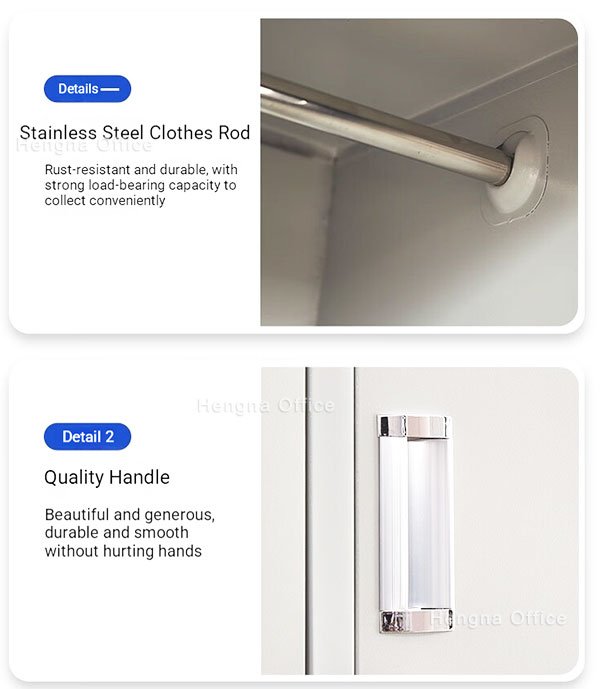
Cold rolled steel with electrostatic powder coating — thickness 60-80μm with strong adhesion. Weak alkaline foam cleaners and pressure washers (under 80 bar) don’t affect the coating. Daily cleaning with diluted detergent is sufficient. Stainless steel hanging rods, grade 304, resist cleaning chemicals just as well — no rust stains on worker uniforms.
③ Rust Resistance — steam and salt in food plants are harder on lockers than normal humidity
Food processing environments have specific conditions that destroy ordinary lockers:
Steam. Cannery, steam cooking workshop, central kitchen — steam is constant year-round. The locker room may be next to the production floor with only a door separating them, so ambient moisture is still high. Door interiors, floor panels, and back panels — if the coating is inadequate at these points, rust starts from the inside within six months.
Salt. Pickling plants, sauce factories, seafood processing — airborne salt levels are several times higher than a normal factory. Hot rolled steel corrodes rapidly in this environment.
Cold rolled steel with dense powder coating provides far better salt spray resistance than hot rolled. Doors close tightly to prevent steam from seeping in through gaps. Cabinet corners are folded and rounded — no sharp edges where dirt collects and rust starts.
④ Logistics — ship alongside food processing equipment
Food plant procurement typically orders production line equipment and supporting furniture together — filling machines, packaging lines, sterilizers, plus lockers, workbenches, and tool cabinets. A single project may involve several dozen to a few hundred lockers. Shipping a full container of just lockers is inefficient. KD flat pack allows mixed container loading with other equipment.
On arrival, the plant maintenance team — two people with a Phillips screwdriver — assembles one unit in about 40 minutes. Installation video works offline, printed diagram in the box.
Good Fit / Not a Fit
Good fit:
- GMP changing rooms in food processing plants (canneries, sauce factories, central kitchens)
- Beverage and dairy plant employee changing areas
- Seafood and meat processing facilities (salt and steam environment)
- Central kitchen and meal prep centers
Not a fit:
- Direct food contact areas — requires stainless steel
- Strong acid or alkali cleaning zones — requires higher chemical resistance grade
- Outdoor uncovered placement — no weather sealing
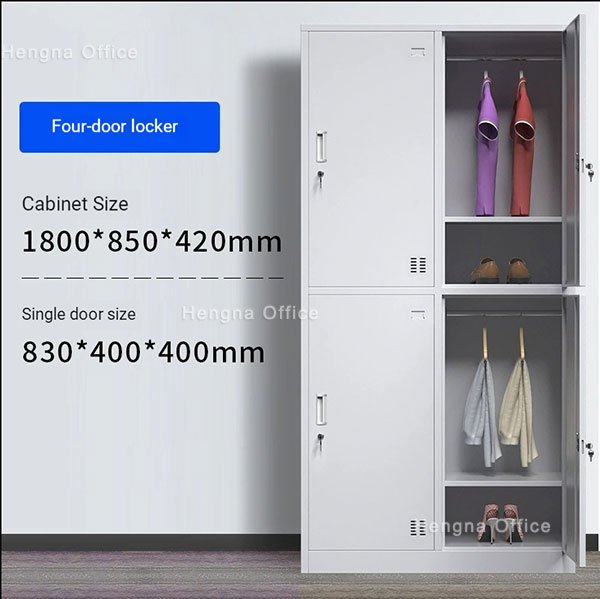
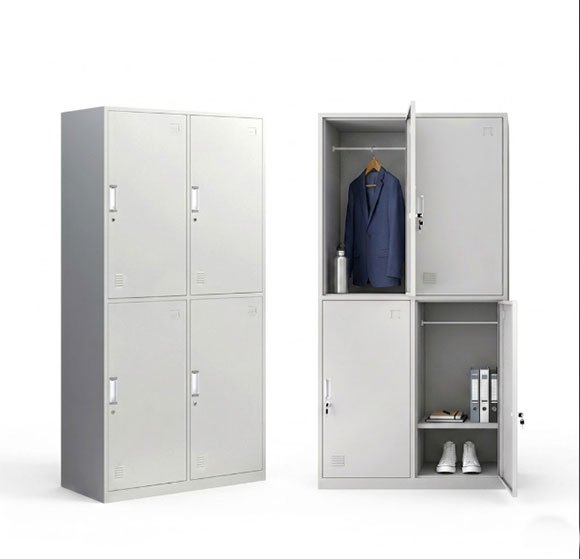
4 Door Food Plant Locker – Easy Clean Powder Product Specs
| Spec | Detail |
|---|---|
| Product | 4-Door Food Plant Locker |
| Overall Size | H1800mm × W850mm × D420mm |
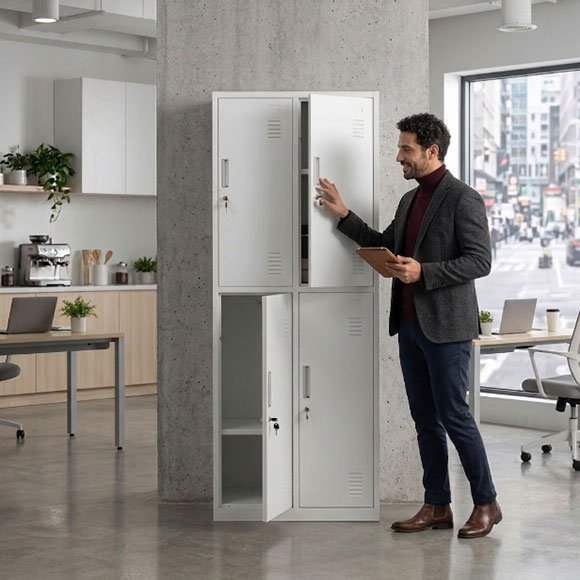
| Internal Layout | 4 compartments, 2 upper + 2 lower, each with separate door |
| Material | Cold rolled steel |
| Finish | Electrostatic powder coating, matte white (custom GMP zone colors available) |
| Structure | KD flat pack |
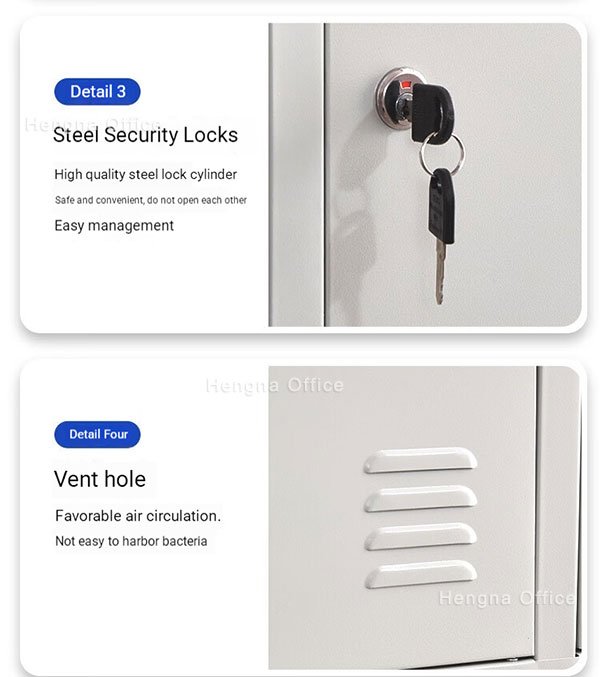
| Hardware | Aluminum alloy handle + individual key lock + stainless steel hanging rod |
| Optional | Number plate / name tag slot |
FAQ
Q: Do food plants really need steel lockers?
Can plastic lockers work? Plastic lockers are cheaper, but GMP audits flag them for surface scratches that trap dirt, poor fire resistance, and faster aging in high-temperature production areas. Steel lockers pass GMP inspection, clean better, and last longer.
Q: Will this locker pass a GMP audit?
It meets GMP basic requirements for changing room lockers — non-absorbent material, cleanable surface, no dirt traps. The final audit result also depends on installation and usage. Consult your local auditing body for specific standards.
Q: Can I pressure wash the locker?
Yes. Pressure washers under 80 bar with diluted detergent won’t damage the coating. Avoid direct spraying on electrical components if fitted.
Q: Can the color match our plant’s zone coding?
Yes. Standard white is available. Custom colors to match GMP zone color coding are supported. Contact us to confirm your color spec.
Q: Can this ship alongside food production equipment?
Yes. KD flat pack allows mixed container loading with filling machines, packaging line parts, and other equipment. Contact us for a mixed loading plan.
Q: Is professional installation needed?
No. In-house maintenance or any two people with a Phillips screwdriver assemble one unit in 40 minutes. Offline installation video and printed diagram included.
Get a Quote
Food plant GMP changing room lockers have more requirements than standard lockers — audit compliance, pressure washing durability, steam and salt resistance. If you have a project and the specifications are still taking shape, reach out. Tell us what you need and we’ll put together a proposal. No obligation — just a conversation.
Contact us for a quote →