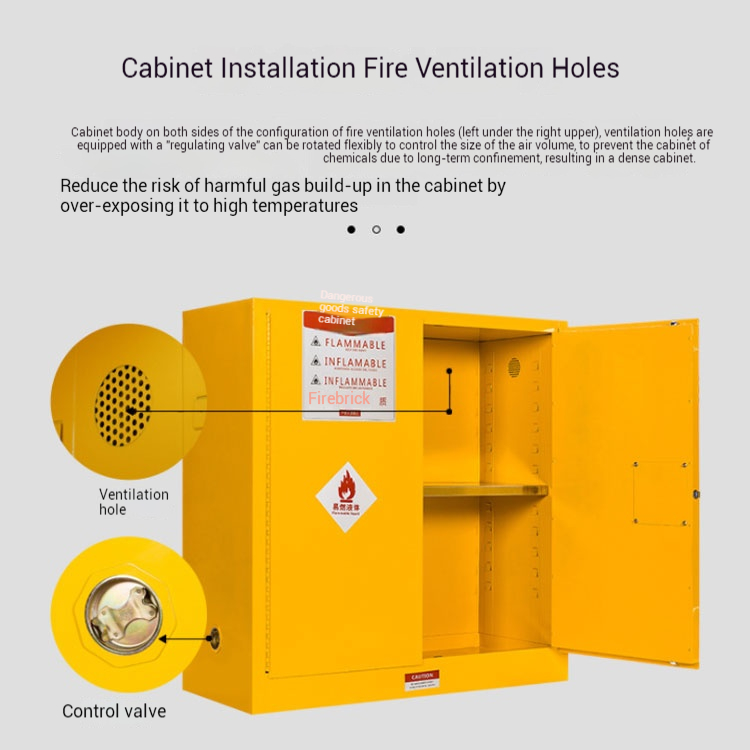
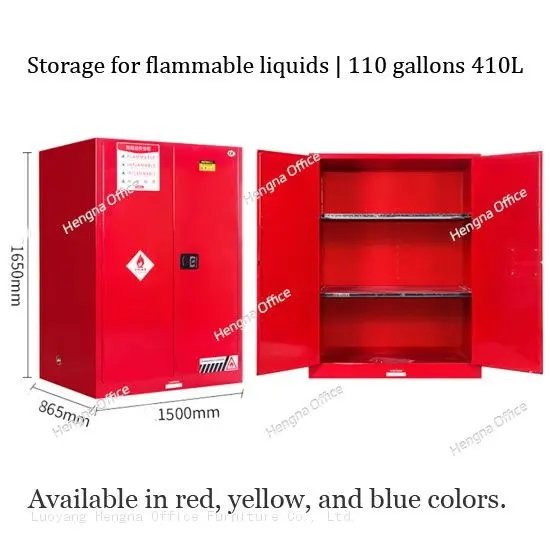
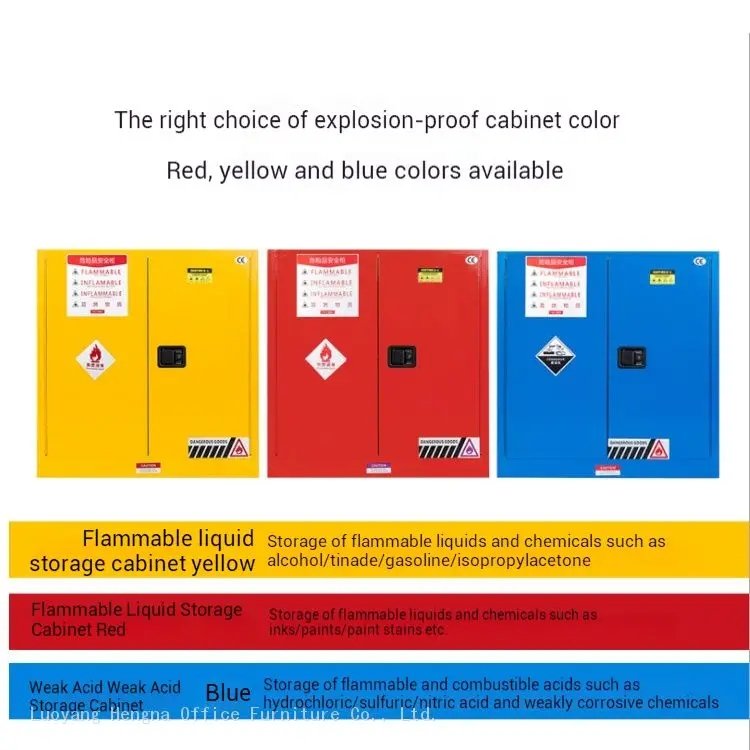
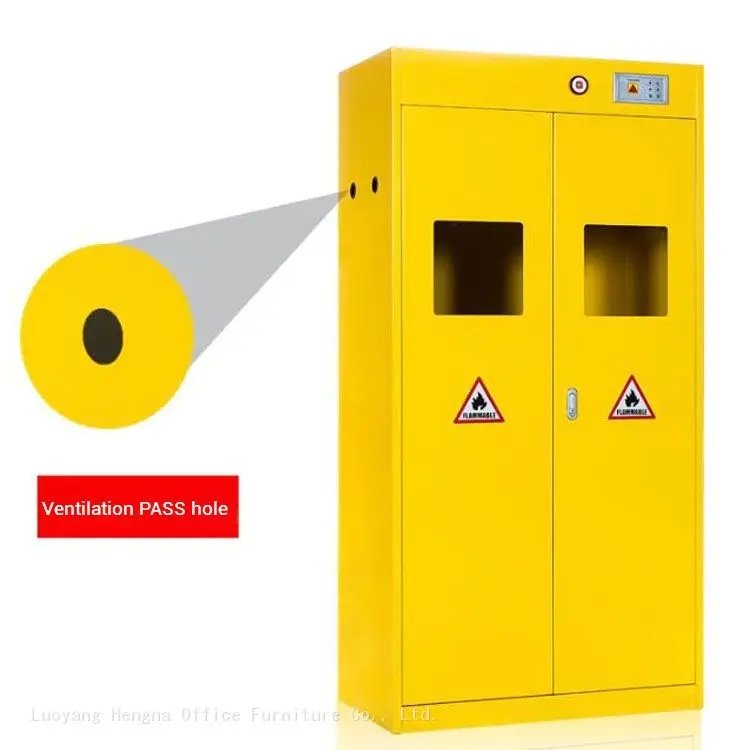
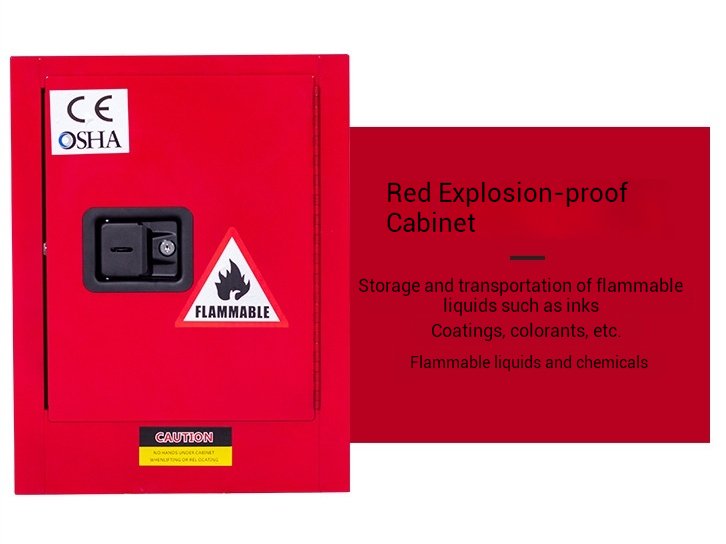
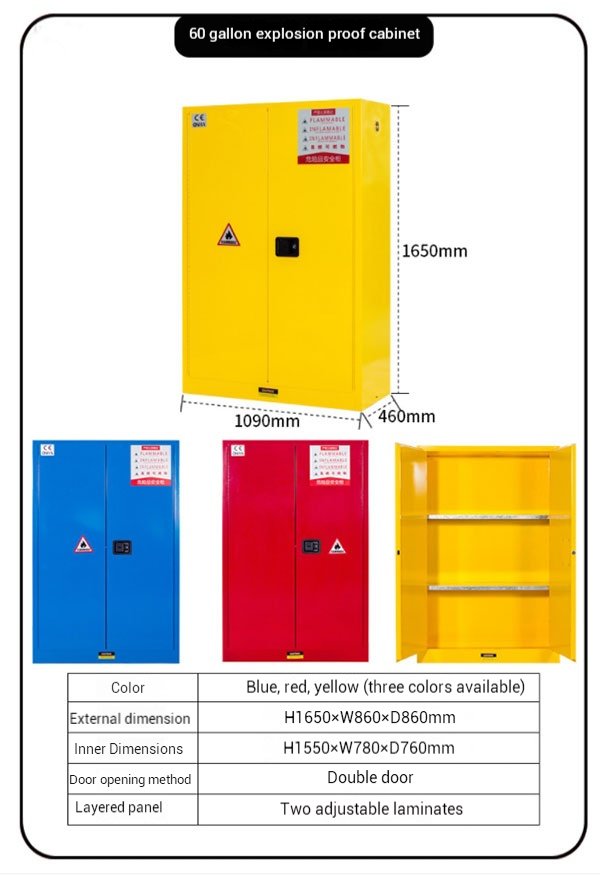
When it comes to safety, small details matter. And in the world of flammable storage cabinets, chemical safety cabinets, and gallon cabinets, one small detail makes a life-saving difference:
the three-point locking system.
Many people focus only on the material, size, or color of a safety cabinet. But professionals know the truth—
the lock is one of the most important safety features of the entire cabinet.
In this article, you will learn:
- What a three-point lock is
- How it works
- Why it is much safer than a standard lock
- Real situations where it prevents accidents
- Why many global safety standards require it
- How to choose the right safety cabinet
Let’s break it down in a simple and clear way.
What Is a Three-Point Locking System?
A three-point lock secures the cabinet door at three positions:
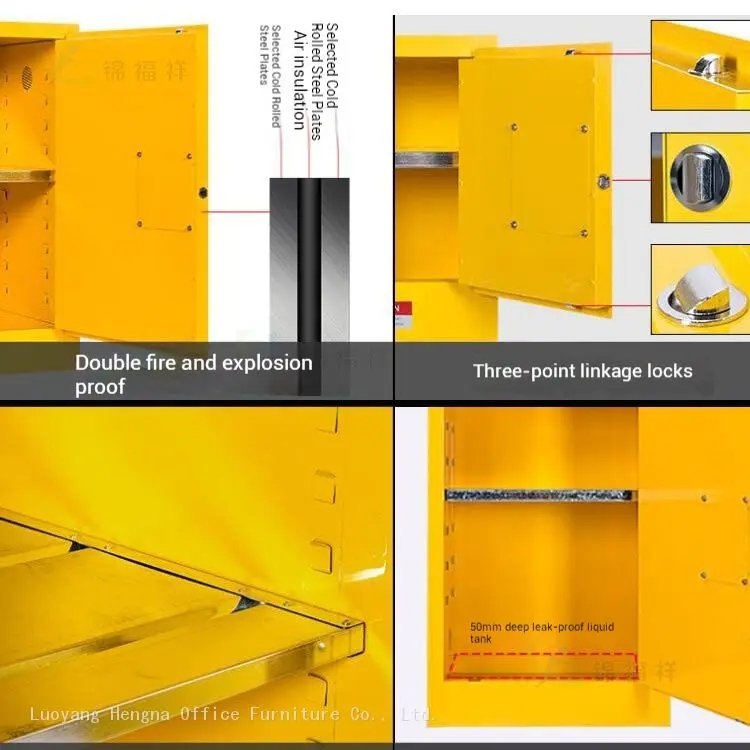
- Top
- Middle
- Bottom
When you turn the handle, three metal rods move at the same time. These rods push into the top and bottom of the cabinet frame, while the middle lock keeps the center secured.
What this means:
- The door stays fully closed
- The pressure spreads across the entire door
- The cabinet is harder to break into
- The door will not pop open under strong impact or fire
This design is the standard in most safety cabinets used in the US, Europe, and Australia.
What Is a Standard Lock?
A standard lock (like the ones used on home or office doors) only locks the middle part of the door. It has only one latch, which means the upper and lower parts of the door are not secured.
The problem:
- Easy to bend or break
- Door gaps appear when force is applied
- Heat can deform the door and make the lock fail
- Not good for chemical fumes or fire control
A standard lock works fine for normal furniture—but not for dangerous materials.
Comparison Table: Three-Point Lock vs. Standard Lock
| Feature | Three-Point Lock | Standard Lock |
|---|---|---|
| Locking Points | 3 | 1 |
| Fire Safety | Excellent | Poor |
| Chemical Vapor Control | Very good | Weak |
| Security Against Breaking | Strong | Low |
| Door Stability | High | Medium |
| Meets Safety Standards (OSHA, NFPA) | Yes | No |
| Best Use | Flammable & chemical cabinets | Home or office furniture |
Why This Small Difference Can Save Lives
1. Fire Safety: The Cabinet Must Stay Closed
During a fire, temperatures can rise extremely fast. Most chemicals stored in safety cabinets are flammable, meaning:
- If the cabinet door opens
- Even a small gap
- The vapors ignite instantly
A standard lock can melt or deform when exposed to high heat. The door may twist and pop open.
A three-point lock, however:
- Holds the entire door in place
- Prevents gaps
- Keeps chemicals inside
- Slows down flames
- Gives people more time to escape and firefighters more time to react
This is why OSHA and NFPA strongly recommend multi-point locks.
2. Preventing Chemical Vapors from Escaping
Many chemicals release harmful vapors—solvents, alcohols, acids, thinners, and more.
With a standard lock, gaps around the door allow vapors to escape into the room. Over time, this may cause:
- Headache
- Dizziness
- Allergic reactions
- Respiratory problems
- Long-term health risks
A three-point lock keeps the door tighter and helps reduce leakage.
3. Preventing Unauthorized Access
In schools, laboratories, hospitals, workshops, and factories, unauthorized access is a big risk.
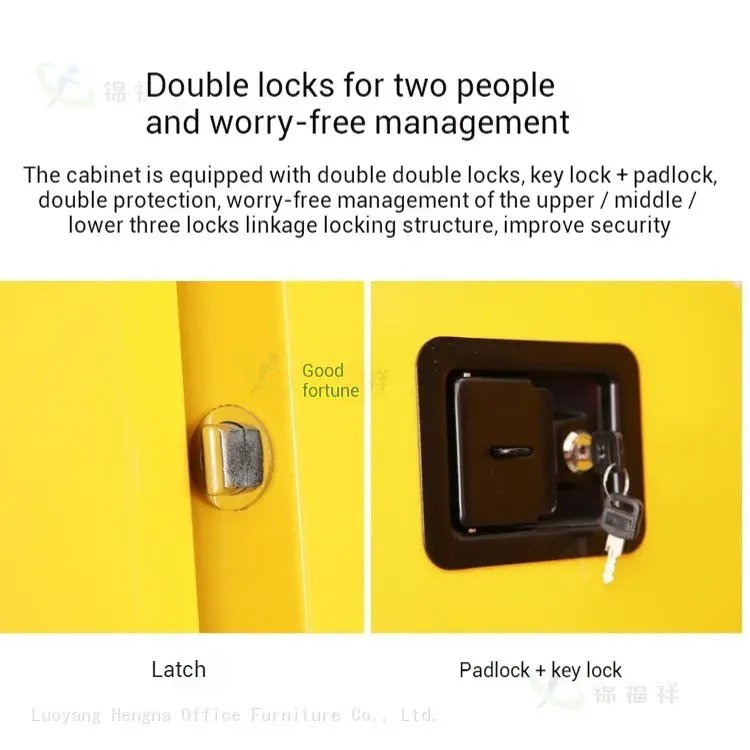
With a standard lock:
- It is easier to force the door open
- Children, students, or untrained workers may get access
- Chemicals may be stolen or misused
Three-point locks are much harder to break and provide extra security and peace of mind.
4. Protection During Daily Use and Accidents
Three-point locks also help in daily situations:
- When someone accidentally bumps the cabinet
- When heavy items fall and hit the door
- When the cabinet is loaded with many bottles and containers
- When there is vibration in the workshop
The door stays firm and stable.
Where Are Three-Point Locks Used?
You will find three-point locking systems in many industrial and professional cabinets:
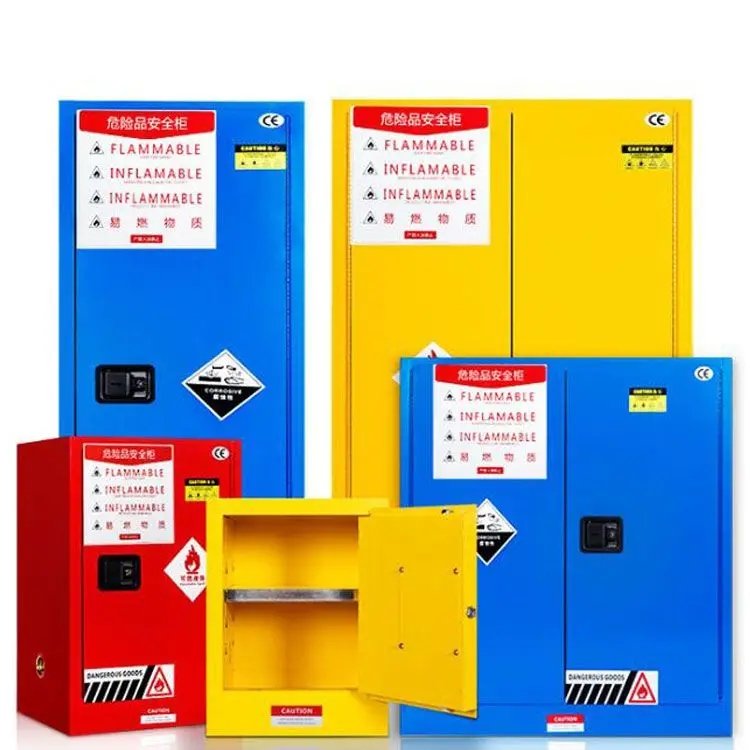
- Flammable storage cabinets
- Chemical safety cabinets
- Gallon safety cabinets
- Hazardous materials cabinets
- Acid and corrosive cabinets
- PP chemical cabinets
- Paint and solvent cabinets
Industries that commonly use them include:
- Laboratories
- Universities and schools
- Manufacturing plants
- Automotive workshops
- Oil & gas facilities
- Food & pharmaceutical factories
- Warehouses and storage centers
- Hospitals and medical research labs
If your business handles chemicals, a three-point lock is a must-have.
How to Identify a Real Three-Point Lock
Some low-quality cabinets only look like they have a three-point lock, but inside, there is no connecting rod.
Here’s how to check:
✔ Open the door and look for two metal rods (top & bottom)
✔ Turn the handle and watch if the rods move
✔ Push the door to check if the top and bottom resist movement
✔ Check if the cabinet mentions OSHA/NFPA compliance
A true safety cabinet will always include this feature.
Why Safety Standards Prefer Three-Point Locks
Global standards such as:
- OSHA 1910.106 (US)
- NFPA 30 (US)
- EN 14470-1 (Europe)
recommend or require multi-point locking for high-risk chemical storage.
These standards are written based on real accidents and decades of research. Every rule is there because someone got hurt before.
This is why many professional buyers consider the three-point lock a non-negotiable feature.
Conclusion: A Small Detail with a Huge Impact
Choosing a safety cabinet is not only about price.
It is about safety. It is about responsibility. It is about preventing disasters.
A standard lock may save money today,
but a three-point lock may save a life tomorrow.
If your work involves chemicals, flammables, or hazardous liquids, choosing a cabinet with a three-point locking system is one of the smartest decisions you can make.
Frequently Asked Questions
Why do safety cabinets require three-point locking?
Three-point locking engages the door at top, bottom, and center simultaneously. This creates uniform pressure across the entire door gasket, ensuring a tight seal that contains vapors and prevents fire penetration. In fire tests, single-point locks allow the door to warp and open under heat, while three-point locks maintain closure. NFPA 30 and FM Global standards mandate three-point locking for all flammable liquid storage cabinets 30 gallons and larger.
Can three-point locks be retrofitted to existing cabinets?
Yes, but it requires professional installation. The retrofit involves drilling three holes in the door frame for the locking rods, installing the linkage mechanism, and replacing the handle. For cabinets with thin doors (less than 18-gauge steel), retrofit is not recommended because the door may not support the locking forces. We recommend purchasing new three-point lock cabinets rather than retrofitting — the cost difference is only 15-20%, and new cabinets are engineered for the locking system.
What maintenance do three-point locks require?
Three-point locks are virtually maintenance-free. The linkage rods are hardened steel that doesn’t wear under normal operation. Lubricate the lock cylinder with graphite powder annually. Check the door alignment every 6 months — if the door drags or doesn’t close smoothly, adjust the hinge screws. For high-humidity environments, apply a light coat of silicone spray to the rods to prevent surface rust. The locking mechanism is sealed and doesn’t require internal lubrication.