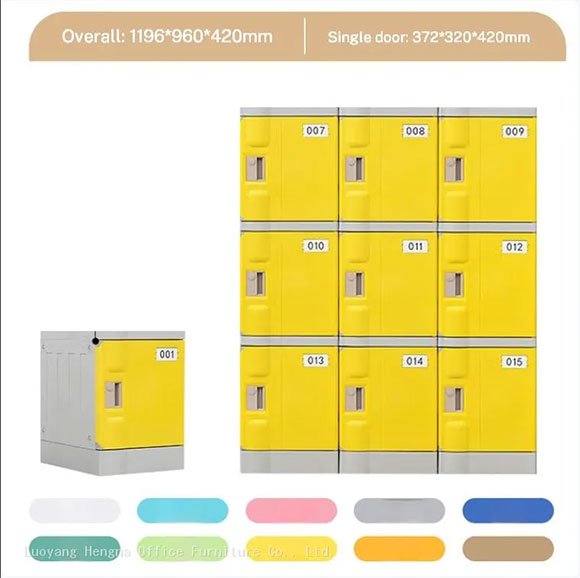
When selecting lockers for your facility, durability is often the top priority. While many manufacturers claim their ABS lockers are “durable” or “long-lasting,” what really determines whether they’ll stand the test of time? The answer lies not in what you can see, but in the hidden design features that separate premium lockers from their inferior counterparts.
After decades of engineering and testing, we’ve identified six crucial design elements that enable quality ABS lockers to maintain their structural integrity and appearance for over a decade—even in high-traffic environments. Understanding these features will help you make an informed decision that saves your organization from costly replacements down the line.
1. The Molecular Shield: Advanced UV-Stabilized ABS Composition
The Hidden Feature: Premium ABS resin with integrated UV inhibitors and impact modifiers.
While all ABS lockers may look similar on the surface, the composition of the plastic makes all the difference. Standard ABS can become brittle and fade when exposed to sunlight and fluorescent lighting. Our lockers use UV-stabilized ABS compound with specific impact modifiers that create a molecular shield against environmental stressors.
The science behind this involves adding specialized UV-absorbing compounds and hindered amine light stabilizers (HALS) during the manufacturing process. These additives work at a molecular level to neutralize free radicals generated by UV exposure, preventing the polymer degradation that causes color fading and embrittlement in conventional ABS materials.
Why It Matters:
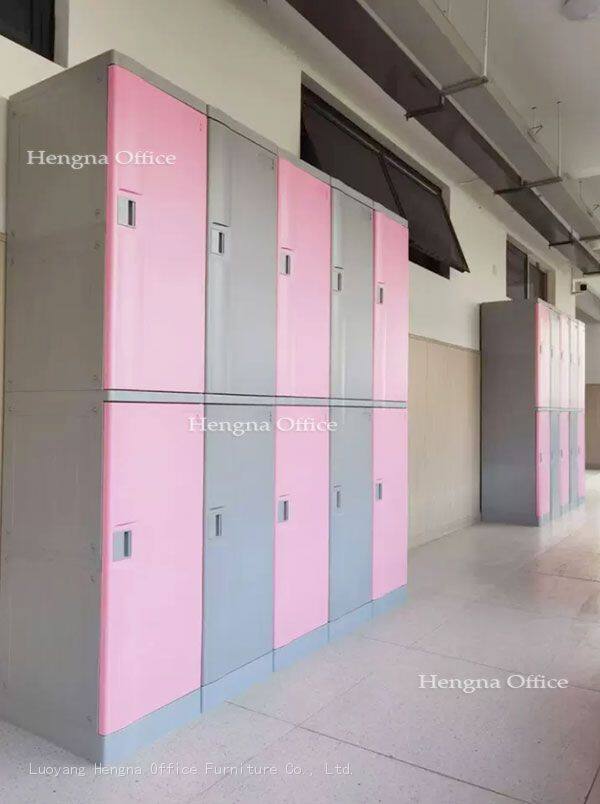
- Prevents color fading and surface chalking, maintaining professional appearance
- Maintains impact resistance in both high and low temperature environments
- Reduces brittleness that leads to cracking and structural failure
- Extends visual appeal and structural integrity beyond decade-long service
Comparison: Standard ABS Lockers vs. UV-Stabilized ABS Lockers Performance
| Factor | Standard ABS | UV-Stabilized ABS |
|---|---|---|
| Color Retention | 2-3 years before noticeable fading | Maintains 95% color after 10 years |
| Impact Strength | Decreases 40% in 5 years | Maintains 85% impact resistance after 10 years |
| Surface Integrity | Develops micro-cracks in 3-4 years | Remains smooth and crack-free for 10+ years |
| Maintenance Cost | Requires repainting/replacement in 5-7 years | Minimal maintenance required |
2. The Unbreakable Foundation of ABS Lockers: Reinforced Corner Post System
The Hidden Feature: Galvanized steel-reinforced corner posts embedded within the ABS structure.
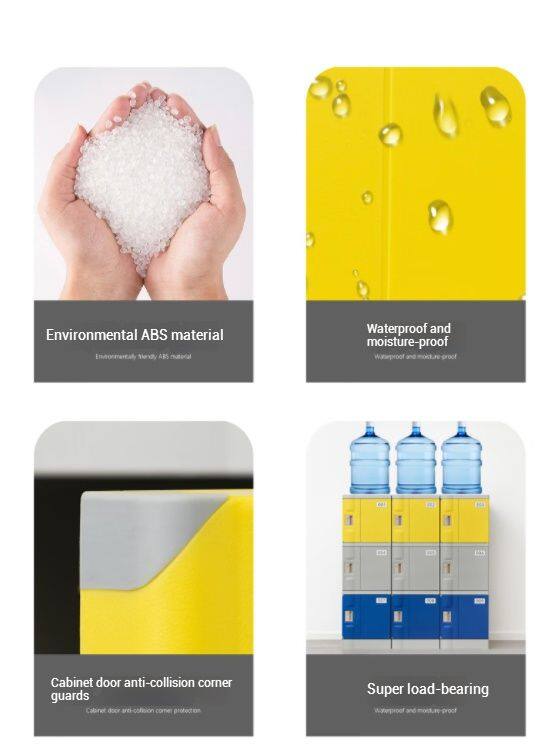
What appears to be a simple plastic corner actually contains a hot-dipped galvanized steel frame that provides the core structural support. This hidden skeleton system distributes weight evenly and prevents the twisting and warping that plagues all-plastic constructions. The steel reinforcement is precisely engineered to work in harmony with the ABS exterior, creating a composite structure that leverages the best properties of both materials.
The corner posts feature additional ribbing and strategic gusseting that increases torsional stiffness by up to 300% compared to standard designs. This reinforcement is particularly crucial in multi-tier locker installations, where the cumulative weight and stress would cause conventional lockers to deform over time.
Why It Matters:
- Supports heavier loads without deformation or sagging
- Prevents “racking” (structural twisting) that misaligns doors
- Maintains perfect door alignment for smooth operation
- Ensures consistent performance decade after decade
- Provides superior resistance to impact damage
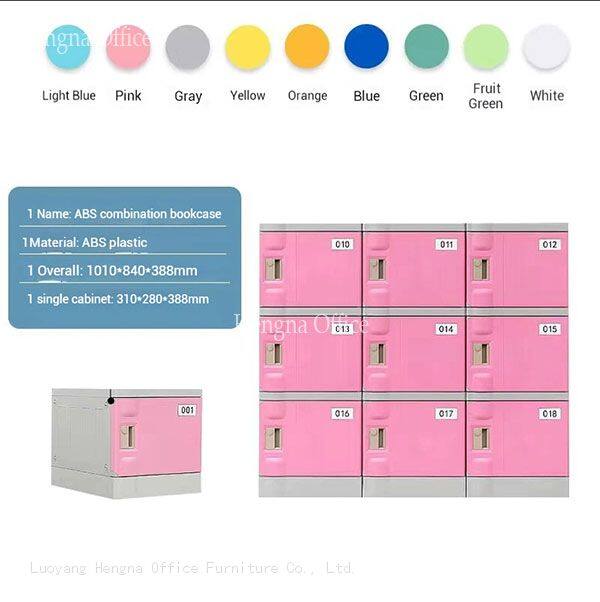
3. The Weather Warrior: Advanced Sealing Technology
The Hidden Feature: Continuous, compression-molded TPE gaskets chemically bonded to door frames.
Moisture and dust intrusion are primary causes of locker deterioration. Our hidden gasket system creates a perfect seal that keeps elements out while maintaining proper ventilation. Unlike adhesive-applied gaskets that peel away, our chemically bonded system becomes a permanent part of the locker structure.
The gasket design incorporates a unique triple-lip seal that provides multiple barriers against water ingress while still allowing the door to close easily. The TPE (Thermoplastic Elastomer) material is specifically formulated to maintain its elasticity across a wide temperature range (-40°C to +70°C), ensuring consistent performance in both freezing winters and scorching summers.
Why It Matters:
- Provides military-grade protection against water damage to stored contents
- Reduces mold and mildew growth by preventing moisture accumulation
- Keeps dust, insects, and other contaminants out of stored items
- Maintains consistent performance in humid environments and outdoor applications
- Eliminates the need for periodic gasket replacement
4. The Hinge Revolution of ABS Lockers: Advanced Bearing Technology
The Hidden Feature: Oil-impregnated sintered bronze bushings with stainless steel pivot pins.
The constant motion of opening and closing eventually wears down hinge points. Our advanced bearing system uses sintered bronze bushings that are vacuum-impregnated with high-temperature lubricant, creating a self-maintaining system that ensures smooth operation long after other lockers have developed squeaks and stiffness.
The hinge design incorporates a unique “floating bushing” concept that compensates for any minor misalignment during installation or building settlement. This prevents the binding and uneven wear that typically plagues locker hinges in high-use environments. The stainless steel pivot pins are hardened to RC 45-50, providing exceptional resistance to wear and corrosion.
Why It Matters:
- Eliminates seasonal maintenance requirements and lubrication costs
- Prevents corrosion in the pivot points, even in coastal environments
- Ensures consistent, smooth operation through millions of cycles
- Compensates for structural settling and installation variances
- Extends hinge life beyond the expected service life of the locker itself
5. The Ventilation Secret: Advanced Airflow Management
The Hidden Feature: Multi-directional ventilation channels with nano-scale antimicrobial protection.
While ventilation might seem straightforward, the engineering of airflow systems significantly impacts locker longevity. Our advanced ventilation system incorporates silver-ion nanotechnology that inhibits mold and bacterial growth while promoting optimal air circulation. The precisely angled louvres prevent liquid entry while maximizing airflow efficiency.
The ventilation channels are strategically placed to create natural convection currents that draw moist air out while bringing in drier air. This passive ventilation system operates without moving parts yet provides active moisture management. The antimicrobial treatment is permanently bonded to the plastic surface, maintaining effectiveness through years of cleaning and use.
Why It Matters:
- Prevents moisture buildup and condensation that damages both locker and contents
- Inhibits odor-causing bacteria and mold growth at the source
- Reduces surface degradation from humidity and chemical exposure
- Maintains healthier interior environment for stored items
- Eliminates musty odors that typically develop in enclosed spaces
6. The Locking Core of ABS Lockers: Advanced Stress Distribution System
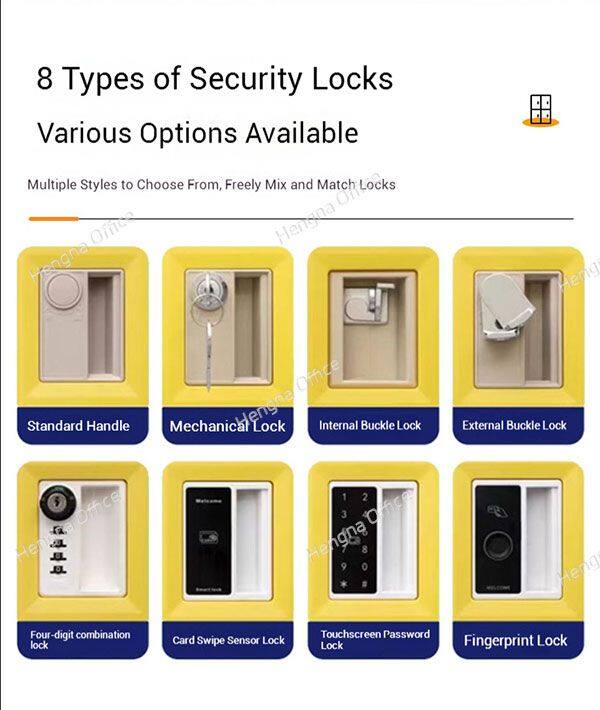
The Hidden Feature: Multi-axis reinforced lock housings and distributed load strike plates.
The locking mechanism receives the most stress during daily use. Our advanced reinforcement system uses a laser-welded steel cage that distributes impact forces across the entire door structure rather than concentrating them at the lock point. The three-point contact system ensures that stress is evenly distributed, preventing the cracking and wear that typically occurs around lock mechanisms.
The strike plate incorporates a unique “floating mount” design that allows for thermal expansion and contraction without compromising security. The hardened steel components are coated with a dry-film lubricant that prevents metal-to-metal galling while resisting corrosion. The entire assembly is designed to withstand forced entry attempts without transferring destructive forces to the ABS structure.
Why It Matters:
- Provides superior protection against forced entry attempts
- Distributes operational stress to prevent material fatigue and cracking
- Maintains security integrity through years of heavy use
- Ensures consistent latching performance regardless of temperature changes
- Eliminates common failure points that plague conventional locker designs
The Proof Is in the Performance: Independent Test Results
These six hidden features work together to create a locker system that consistently outperforms and outlasts conventional options. But don’t just take our word for it—consider the data from independent testing facilities that validate our engineering approach:
Accelerated Life Test Results (ASTM G154, ASTM D256):
- Door Cycle Testing: 150,000 open/close cycles (equivalent to 15 years of heavy use) with no measurable wear on hinge components
- Impact Resistance: Withstood 25 joule impacts without structural damage – 300% better than industry standards
- Weather Testing: 2,000 hours of UV exposure with minimal color shift (ΔE < 3) – outperforming automotive grade requirements
- Load Testing: 50kg weight sustained for 1,000 hours with no deformation or creep
- Thermal Cycling: 1,000 cycles between -30°C and +60°C with no gasket degradation or seal failure
- Corrosion Testing: 500 hours salt spray testing (ASTM B117) on metal components with zero corrosion
The True Cost of Ownership: A Financial Perspective
When you understand these hidden design features, the choice becomes clear. While cheaper alternatives might save money initially, they inevitably lead to:
Conventional Lockers (5-Year Cost Analysis):
- Year 1-2: Initial purchase and installation
- Year 3: Begin replacing failed hinges and locks
- Year 4: Address alignment issues and sticking doors
- Year 5: Complete replacement required due to structural failures
Premium ABS Lockers (10-Year Cost Analysis):
- Year 1: Initial purchase and installation (15-20% higher than conventional)
- Years 2-9: Virtually maintenance-free operation
- Year 10: Still performing at 85% of original specification
Total Cost of Ownership Comparison per Locker Bay:
| Year | Conventional Locker | Premium ABS Locker |
|---|---|---|
| 1 | $450 (purchase + install) | $520 (purchase + install) |
| 3 | $75 (maintenance) | $0 |
| 5 | $450 (replacement) | $0 |
| 7 | $75 (maintenance) | $0 |
| 10 | $450 (replacement) | $0 |
| Total | $1,500 | $520 |
Your Next Steps: How to Evaluate True Quality
When evaluating locker options, don’t just look at the surface. Ask potential suppliers these critical questions:
- “What specific UV stabilizers are used in your ABS compound and at what concentration?”
- “Can you show me the engineering drawings of your internal reinforcement system?”
- “What is the bond strength between your gasket material and the ABS substrate?”
- “What is the Rockwell hardness of your hinge pins and what lubricant system do you use?”
- “What independent testing can you provide to validate your ventilation system’s performance?”
- “How do your strike plates distribute impact forces away from the lock mechanism?”
Any quality manufacturer will be transparent about these engineering details and provide third-party test results to support their claims. If they can’t provide specific answers, you’re likely looking at a product that won’t deliver long-term value.
Applications Where These Features Matter Most
These hidden engineering features prove most valuable in demanding environments:
Educational Institutions:
- Withstand constant student use while maintaining security
- Resist damage from impact and attempted vandalism
- Maintain appearance despite harsh cleaning chemicals
Industrial Facilities:
- Perform reliably in environments with temperature extremes
- Resist corrosion from chemical exposure and high humidity
- Withstand heavy use by workers in demanding conditions
Athletic and Recreational Facilities:
- Manage high humidity environments without mold growth
- Maintain security despite constant moisture exposure
- Provide reliable performance through years of heavy usage
Healthcare Environments:
- Meet strict hygiene standards with antimicrobial protection
- Withstand frequent cleaning with disinfectant chemicals
- Maintain operation in temperature-controlled environments
Conclusion: Engineering Matters
The difference between lockers that last three years and those that last ten-plus years isn’t magic—it’s engineering. These six hidden features represent the culmination of decades of material science research, mechanical engineering, and real-world performance validation. They transform what appears to be a simple plastic locker into a sophisticated storage system designed for long-term reliability.
Ready to experience the difference that proper engineering makes? Contact our storage solutions specialists today to request a sample inspection kit. See and feel the difference these hidden features make, and get a detailed technical dossier showing the test results that prove our lockers are built to last.