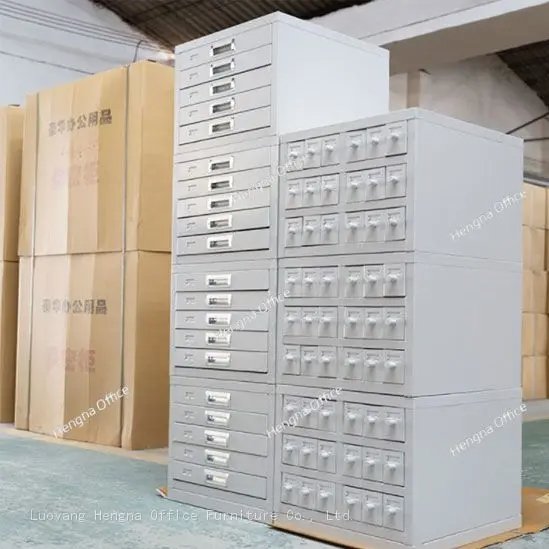
For architectural, engineering, and design firms, blueprints are the lifeblood of every project—detailed plans that transform visions into reality. Yet, many teams struggle with storing these critical documents: oversized sheets crammed into flimsy cabinets, edges bent from repeated folding, or hours wasted searching for misplaced drawings. These issues aren’t just inconvenient—they risk permanent damage to irreplaceable designs and slow down project timelines. If your firm faces these challenges, a heavy-duty blueprint storage cabinet is more than a solution—it’s an investment in efficiency, safety, and long-term success.
This guide dives into why 2025 demands professional blueprint storage and equips you to choose the right cabinet for your team.
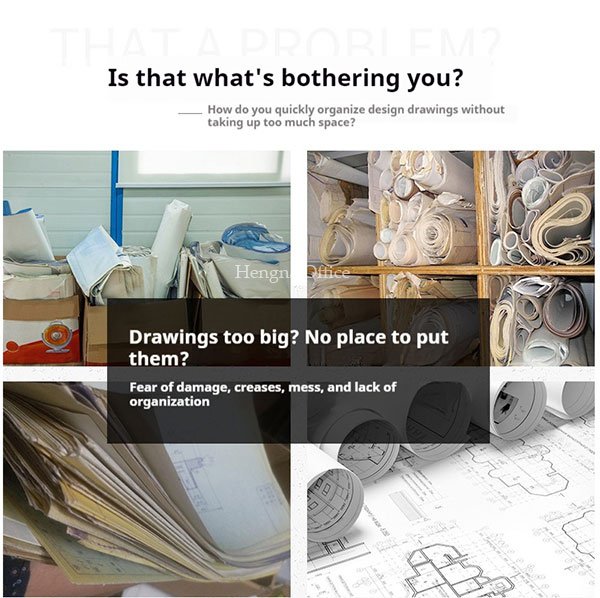
The Pain Points of Traditional Blueprint Storage
Before we explore solutions, let’s unpack the common struggles of storing large-format documents:
1. Oversized Sheets Don’t Fit
Standard file cabinets are designed for letter-size paper, not 36″ x 48″ blueprints. Forcing large sheets into small spaces leads to:
- Folding and creasing: Even minor bends can distort measurements, compromising accuracy
- Tearing: Repeated handling to fit sheets into tight spaces increases the risk of rips
2. Cluttered, Inefficient Spaces
Stacks of blueprints on desks or floors eat up valuable office real estate. A single unorganized pile can take up square footage that could be used for collaboration or equipment.
3. Damage from Environmental Factors
Blueprints are vulnerable to:
- Moisture: Humidity causes paper to warp or mold, rendering designs unusable
- Dust and debris: Loose particles scratch surfaces or obscure details
- Sunlight: UV rays fade ink over time, making prints hard to read
4. Time-Consuming Searches
Without a systematic storage solution, finding a specific drawing feels like a scavenger hunt. This wastes hours per week—time that could be spent on design work instead.
Why Heavy-Duty Blueprint Cabinets Are Non-Negotiable in 2025
As projects grow more complex and deadlines tighten, firms can’t afford to compromise on storage. Here’s how a professional blueprint cabinet solves the above pain points—and adds value beyond basic organization:
1. Optimized Space Utilization
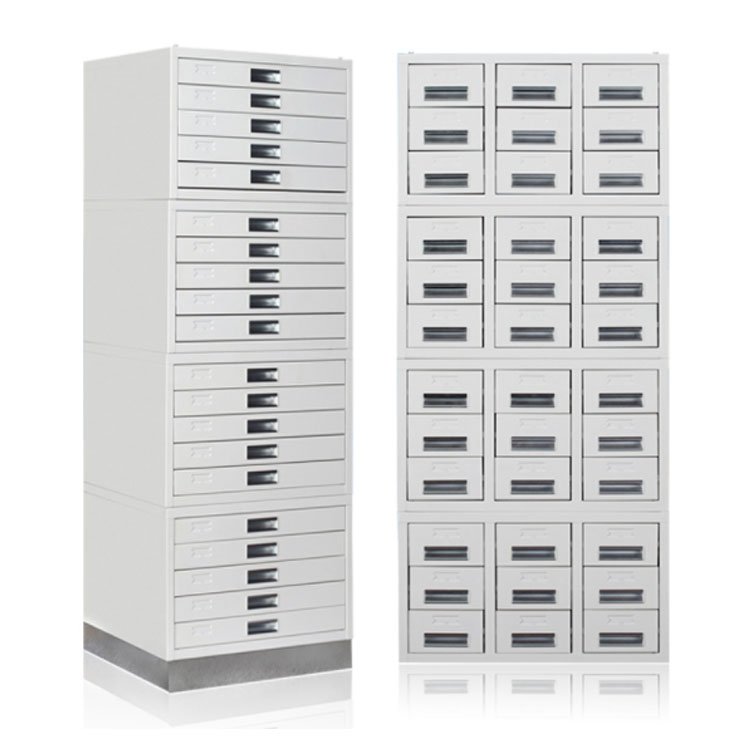
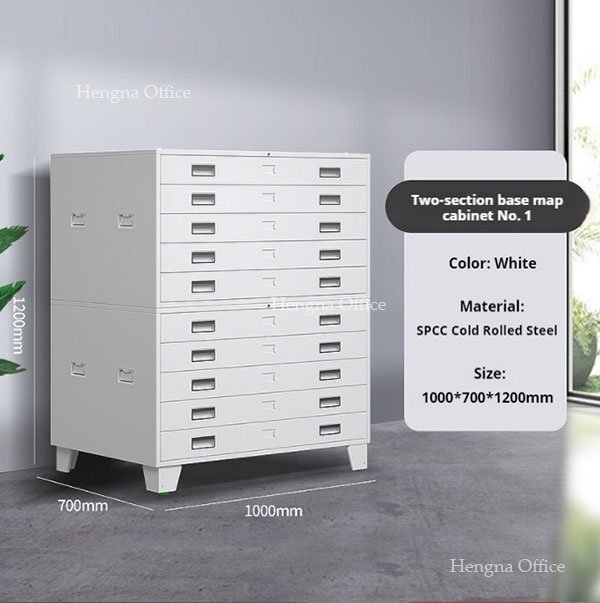
Unlike bulky stacks or flimsy racks, modern blueprint cabinets (like Hengna Office’s two-section base map cabinet) use vertical space efficiently. With dimensions like 1000mm (width) x 700mm (depth) x 1200mm (height), they hold dozens of sheets while taking up minimal floor area. This is especially critical for firms working in cramped offices or shared studios.
2. Unmatched Durability
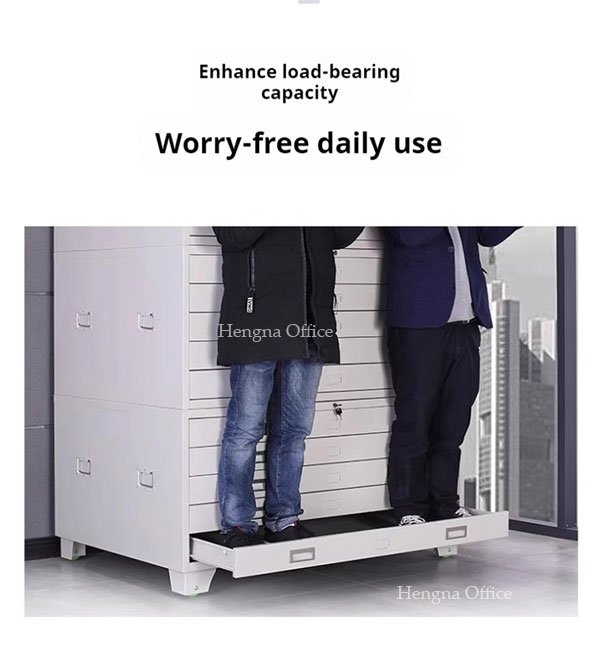
Blueprints are heavy—especially when stored in bulk. Cheap plastic or particleboard cabinets buckle under weight, leading to warped shelves or broken hinges. SPCC cold-rolled steel, the gold standard for industrial storage, resists dents, scratches, and warping. It’s built to withstand years of frequent use, even in high-traffic offices.
3. Comprehensive Protection
A quality blueprint cabinet acts as a shield against environmental damage:
- Dust-proof seals: Keep debris out of drawers
- Moisture-resistant coatings: Protect against humidity (ideal for coastal or humid climates)
- Smooth, rounded edges: Prevent tears when sliding sheets in or out
4. Streamlined Workflow Efficiency
Organization isn’t just about looks—it’s about speed. Most blueprint cabinets feature:
- Labeled drawers: Quickly identify which set of drawings belongs to which project
- Easy-access handles: Pull out drawers without straining (no more crawling under stacks!)
- Modular design: Add or rearrange sections as your team grows
The result? Teams spend less time hunting for files and more time focusing on what matters: designing great buildings.
2025 Buyer’s Guide: Choosing the Right Blueprint Cabinet
Not all blueprint cabinets are created equal. To pick one that meets your firm’s needs, consider these key factors:
1. Material & Construction
- Avoid plastic or MDF: They’re prone to breaking under heavy loads
- Prioritize SPCC cold-rolled steel: It offers the best balance of strength and affordability. Look for cabinets with reinforced joints and thick gauge steel (at least 1.2mm) for maximum durability
2. Size & Capacity
Measure your largest blueprint (e.g., 30″ x 42″) and ensure the cabinet’s internal dimensions can accommodate it. For most firms, a 1000mm x 700mm x 1200mm cabinet strikes the perfect balance: it holds 50+ sheets without overwhelming your space. If you have extra-large plans (like architectural renderings), opt for a deeper model (800mm+) to prevent bending.
3. Load-Bearing Capacity
Check the manufacturer’s specs for maximum weight capacity. A good rule of thumb: multiply the number of drawers by 20kg (the average weight of a stack of blueprints). For example, a 10-drawer cabinet should support at least 200kg.
4. Design & Aesthetics
Your cabinet shouldn’t clash with your office decor. Choose neutral colors like white (as seen in Hengna Office’s model) for a clean, professional look. If you prefer something bolder, black or gray options are widely available. Also, consider features like:
- Lockable drawers: Secure sensitive designs
- Caster wheels: Move the cabinet easily for reorganization
5. Brand Reputation & Warranty
Invest in a trusted brand like Hengna Office, which has a track record of producing reliable storage solutions. Look for warranties of at least 5 years—this shows the manufacturer stands behind their product. Read reviews from other architectural firms to gauge real-world performance.
Comparison: Traditional vs. Heavy-Duty Blueprint Storage
| Feature | Traditional Storage | Heavy-Duty Cabinet |
|---|---|---|
| Space Efficiency | Poor (horizontal stacking) | Excellent (vertical utilization) |
| Durability | Low (plastic/wood materials) | High (SPCC steel construction) |
| Protection | Minimal (exposed to elements) | Comprehensive (sealed, climate-resistant) |
| Organization | Difficult (no system) | Easy (labeled, categorized drawers) |
| Long-term Value | Poor (frequent replacement) | Excellent (decades of use) |
FAQs: Blueprint Cabinet Edition
Still have questions? Here are answers to common concerns:
Q: Can I customize the size of my cabinet?
A: Yes! Many suppliers offer custom dimensions to fit unique blueprint sizes or office layouts. Just provide the manufacturer with your requirements (e.g., “I need a cabinet that fits 36” x 48″ sheets”).
Q: How do I maintain my cabinet?
A: Keep it simple:
- Wipe down surfaces with a soft cloth and mild detergent weekly
- Lubricate drawer slides annually to prevent sticking
- Avoid placing heavy objects on top of the cabinet (this can strain the structure)
Q: Can I store other items besides blueprints?
A: Absolutely! These cabinets are versatile. Use them for:
- Posters or marketing materials
- Engineering schematics
- Large-format photos or artwork
In 2025, efficient storage isn’t a luxury—it’s a necessity. A heavy-duty blueprint cabinet protects your most valuable assets (your designs), saves your team time, and enhances your firm’s professionalism. Whether you’re a small studio or a large practice, the right cabinet will pay for itself in reduced stress and increased productivity.