A dispensing cabinet isn’t judged by how it looks on a showroom floor. It’s judged by how it performs across a single day in a real pharmacy — from the 8 a.m. drug delivery through the 5 p.m. inventory count. Every feature that matters shows up at one of four moments in that day.
Walk through the day with a pharmacist. You’ll see exactly which parts of the cabinet design earn their keep, and which are just marketing.
8:00 — Drug Delivery Hits the Counter
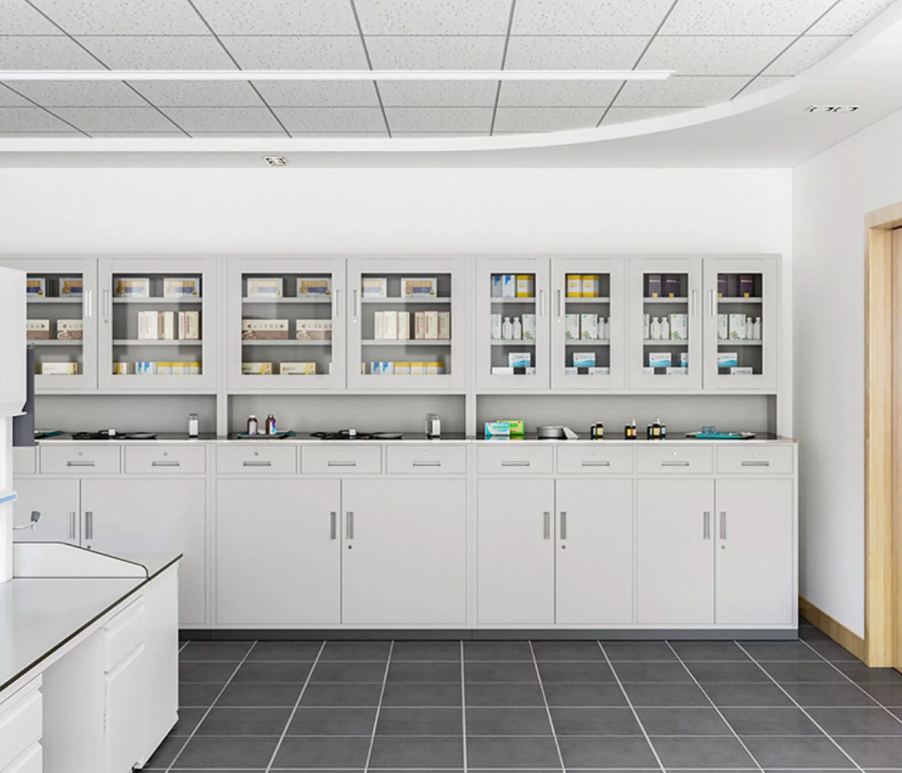
The wholesaler drops off 40–60 items a day: bottles, blister packs, tubes, small glass vials. The first thing the pharmacist does is check the countertop. It needs to be stainless steel — not powder-coated wood or particleboard — because it gets wiped down with alcohol multiple times a day, and it needs to survive a dropped bottle of syrup without absorbing anything.
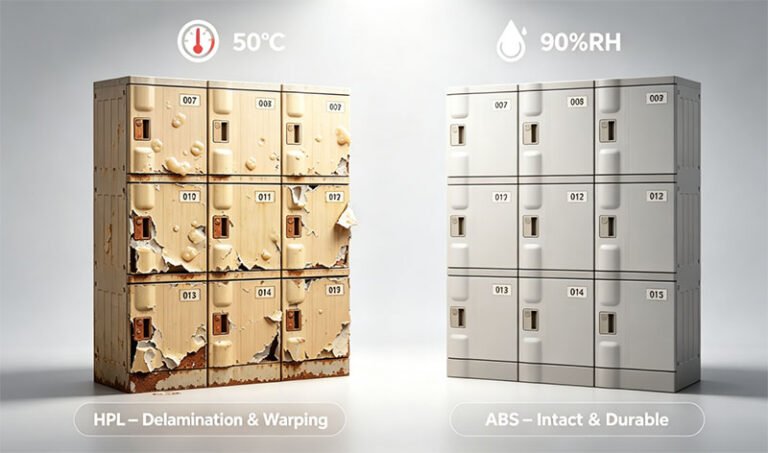
This is why “food-grade stainless steel top” isn’t a premium option. It’s the minimum. A cabinet with a laminate top will delaminate inside a year. You’ll see it at the edge, bubbling up where the wipes have been.
10:00 — Shelving the Morning Delivery
Now the pharmacist opens drawers and puts things away. Two design choices show up here:
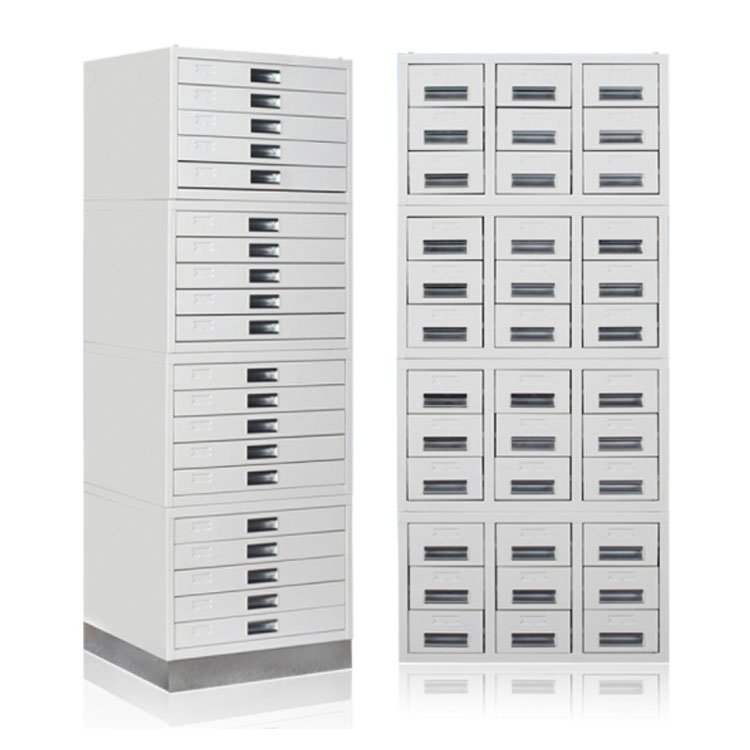
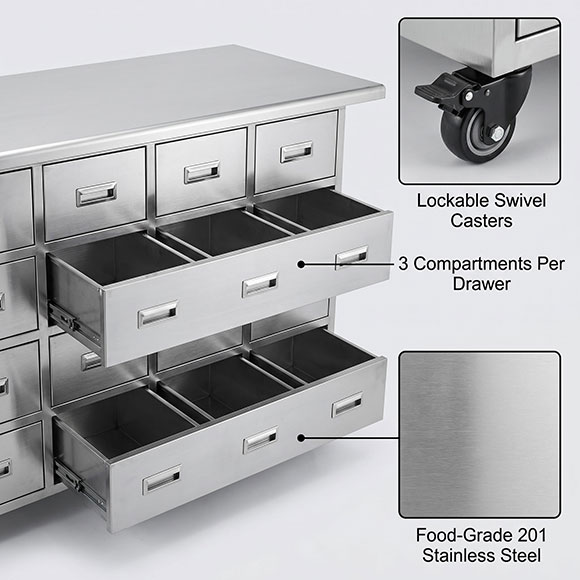
- Divided compartments, not empty drawers. A drawer without dividers becomes a junk drawer within a week — bottles on their sides, boxes collapsed, expiration dates unreadable. Dividers that slide and adjust let the pharmacist set the compartment size to the box, not the other way around.
- Drawers that lock independently. Controlled substances need their own locked drawer. If the whole cabinet has one master lock, the pharmacist has to choose between locking the C-IIs and making the OTC’s inaccessible. Independent locks solve this.
14:00 — The Prescription Rush
Lunchtime hits, and 15 prescriptions need filling in 20 minutes. The pharmacist opens a drawer, grabs two bottles, closes it, moves to the next. What matters now is:
- Smooth glides. A drawer that sticks when you’re in a rush gets slammed. Slammed drawers bend slides and knock bottles over. Full-extension soft-close slides are the spec, not the upgrade.
- Label holders on every drawer. The pharmacist isn’t reading small print on 40 drawers in a hurry. A clear label slot on the front of each drawer means the right drawer opens on the first try.
17:00 — End-of-Day Count
The last job of the day is the controlled-substance count. The pharmacist opens the C-II drawer, counts the remaining oxycodone, signs the log, and locks the drawer. Then they lock the whole cabinet and go home.
This is where the independent lock earns its keep again. If only the whole cabinet locks, the count still requires unlocking everything. If the C-II drawer has its own lock, the count takes 90 seconds instead of 10 minutes, and the cabinet stays shut all night.
The Test: A Full Day Before You Buy
Before you spec a dispensing cabinet, walk through a day like this on paper. If a feature doesn’t show up at 8 a.m., 10 a.m., 2 p.m., or 5 p.m., it’s probably a feature you don’t need. The cabinet that survives a real pharmacy day — stainless top, divided drawers, independent locks, smooth glides, label holders — is the one that doesn’t get replaced in three years.
If your clinic also runs a small lab with reagents, those acids and bases don’t belong on the pharmacy shelf — see our PP corrosive cabinet guide for how to branch your chemical list.
A dispensing cabinet earns its keep across a full day of pharmacy work, not in a showroom. Tell us your daily prescription volume and we’ll size the drawers to your workflow — no upsells on features you won’t actually touch.