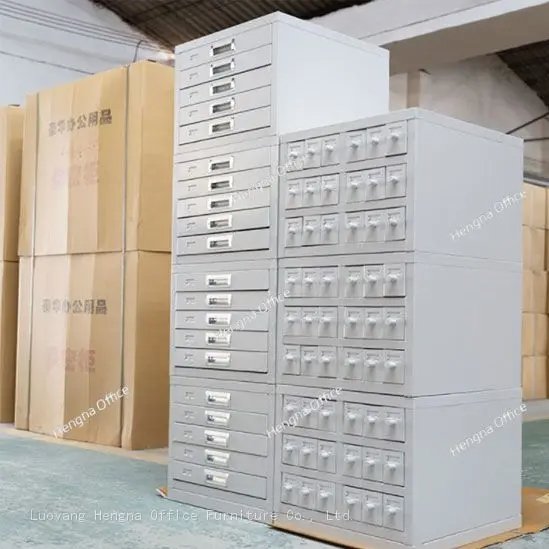
Ever wondered what separates a professional-grade heavy-duty tool cabinet from a flimsy storage box that buckles under weight? The difference isn’t just in the steel thickness advertised on the spec sheet—it’s woven into every single step of its creation. For professionals in workshops, factories, and repair stations, a tool cabinet isn’t furniture; it’s a foundational piece of shop infrastructure. Its failure means downtime, damaged tools, and lost productivity.
At Hengna, we build cabinets to be the most reliable, durable partner in your workspace. We believe true quality isn’t inspected into a product; it’s built into it, from the very first raw material to the final packaged product rolling off the line. Let’s pull back the curtain and walk through the meticulous quality control journey of our heavy-duty tool cabinet.
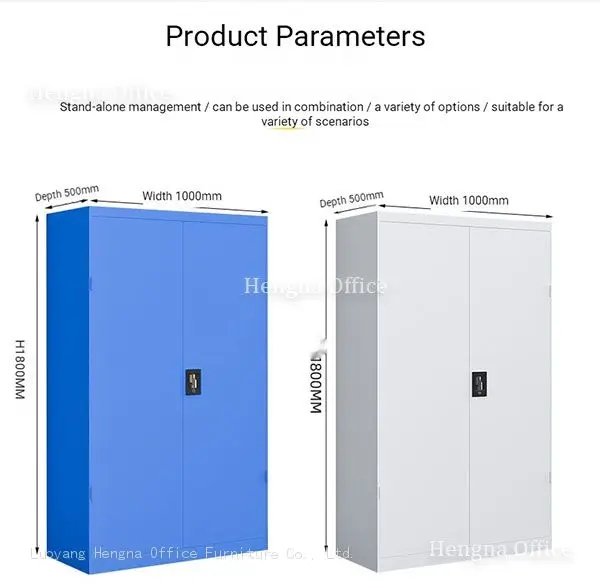
Chapter 1: The Foundation of Cabinet– Raw Material Inspection
Our journey begins not on the factory floor, but at the loading dock, with the arrival of massive steel coils.
- Material Grade Verification: Every coil is certified as SPCC cold-rolled steel. We verify the mill certificates and often perform random sample tests to confirm hardness, tensile strength, and composition. This ensures the metal has the inherent strength and formability we require.
- Thickness & Surface Audit: Using precision micrometers, we audit the sheet thickness at multiple points. Even a slight deviation can affect structural integrity and load capacity. The surface is also meticulously inspected for imperfections like rust, pits, or scaling that could compromise the final finish.
- The “First Article” Cut: Before mass production begins, the first sheets are cut and formed. These “first articles” undergo rigorous dimensional and stress testing. Only when they pass every benchmark do we approve the batch for full production. Quality Control Checkpoint #1: No raw material moves forward without verified certification and perfect surface integrity.
Chapter 2: Precision Shaping – The Stamping & Fabrication Stage
Raw steel is transformed into precise tool cabinet components here. Precision is everything.
- CNC Laser/Punch Cutting: Our computer-numerical-controlled (CNC) machines cut drawer panels, side walls, and brackets. We regularly check cut samples for dimensional accuracy, ensuring perfect 90-degree angles and smooth, burr-free edges. Burrs are not just a cosmetic issue; they can damage tools and cause injury.
- Robotic Bending & Forming: High-tonnage press brakes, often robotic, bend the metal into shape. The key here is the consistency of the bend angle and radius. We use laser angle measuring tools to ensure every single part is identical. Inconsistent bends lead to misaligned drawers and weak joints.
- Spot-Welding Integrity: Components are joined by high-frequency spot welders. We perform destructive “peel tests” on sample welds at scheduled intervals throughout the day. This involves prying apart a welded sample to examine the weld nugget. A proper weld will tear the metal around it, not the weld itself. Quality Control Checkpoint #2: Dimensional tolerances are held within ±0.5mm, and weld strength is validated destructively.
Chapter 3: The Backbone – Assembly & Structure Verification
This is where the tool cabinet takes shape. Our focus shifts to structural integrity and functional alignment.
- Frame Squareness & Rigidity: The main tool cabinet frame is assembled on a precision jig. We measure diagonal dimensions to confirm it’s perfectly square. A cabinet that isn’t square will have doors and drawers that bind and sag over time.
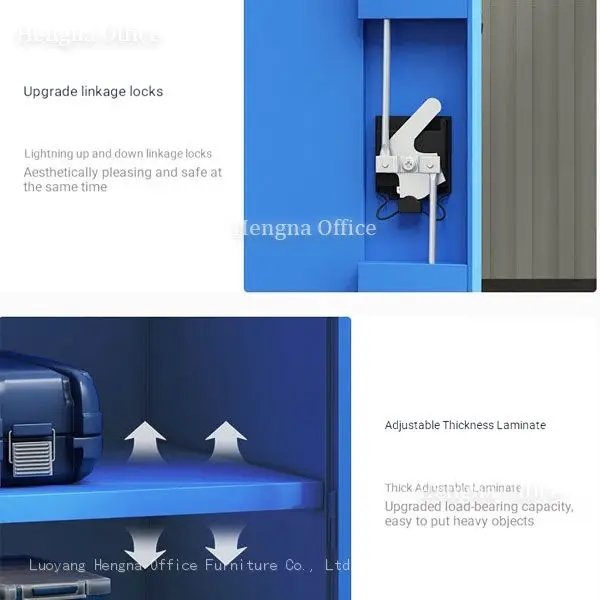
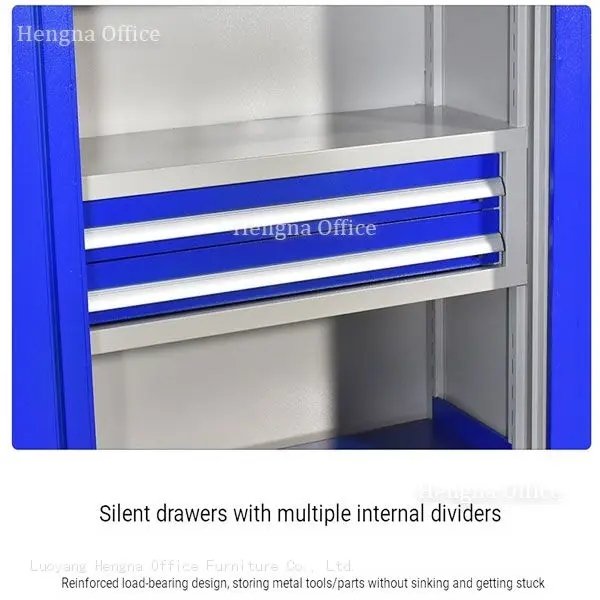
- Drawer Slide & Layer Bracket Installation: The points that bear the entire load—the slides for drawers and brackets for adjustable shelves—are installed with precision. Each slide is tested for smooth, full-extension operation and aligned perfectly so drawers open with one finger, even when fully loaded.
- Load-Bearing Simulation: Before any finishing, random sample tool cabinets undergo static load testing. Weights simulating 150% of the rated capacity are placed on shelves and in drawers for extended periods to check for deflection or deformation. Quality Control Checkpoint #3: Every cabinet frame is squared; every slide is tested for smooth operation under load.
Chapter 4: The Shield – Surface Treatment & Powder Coating
A durable finish protects against corrosion, chemicals, and daily wear. It’s a multi-stage shield, not just paint.
- Pre-Treatment (Phosphating): Assembled cabinets go through a multi-stage wash: degreasing, rinsing, and a phosphate coating process. This chemical bath etches the steel and creates a micro-crystalline layer that dramatically improves paint adhesion and corrosion resistance. We check for complete, even coverage.
- Powder Coating Application: Dry, electrostatically charged powder is applied. Unlike liquid paint, it produces a thicker, more uniform, and solvent-free finish. We control the powder thickness meticulously—too thin, and it lacks durability; too thick, it can chip.
- Curing & Hardness Test: The tool cabinet enters a curing oven where the powder melts and flows into a hard, continuous film. We perform cross-hatch adhesion tests and pencil hardness tests on cured samples to ensure the coating won’t peel or scratch easily. Quality Control Checkpoint #4: Finish adhesion is tested to exceed industry standards, ensuring chips don’t lead to rust.
Chapter 5: The Final Touch – Hardware, Final Assembly & Comprehensive Testing
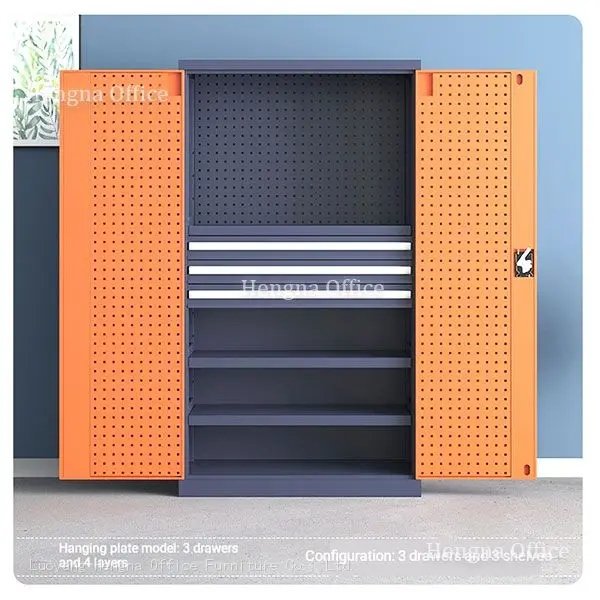
The final assembly brings together all components for a final, holistic validation.
- Hardware Functionality: Every lock is tested for smooth operation and security. Each full-width aluminum drawer handle is checked for secure mounting. The 3C-certified tempered glass door panels are inspected for clarity and safety.
- Full Functional Audit: Every single drawer is opened and closed dozens of times. Doors are aligned. Locks are engaged and disengaged. The adjustable shelf system and modular pegboard (with both square and louvered hole patterns) are fitted and checked.
- Packaging for Journey: Finally, the tool cabinet is carefully packaged with heavy-duty corner protectors and stretch wrap, ensuring it arrives at your facility in the same pristine condition it left ours. Quality Control Checkpoint #5: 100% functional testing of all moving parts and safety features before packaging.
Conclusion: More Than a Tool Cabinet – A Promise of Reliability
The journey from a raw steel coil to a robust heavy-duty tool cabinet is a symphony of precision engineering, rigorous testing, and unwavering standards. At Hengna, our quality control process is our promise: a promise that your investment will organize, protect, and serve your valuable tools for years to come. It’s the invisible craftsmanship behind every visible feature—the SPCC cold-rolled steel, the adjustable shelving, and the industrial-grade locking system.
When you choose our tool cabinet, you’re not just buying storage; you’re buying the confidence that comes from a product built to endure the demands of your professional world.