Imagine it’s Tuesday, 10 a.m. An OSHA compliance officer walks through your shop door with a clipboard. You have 45 minutes before they start asking about the 5-gallon cans of acetone by the drill press. The walk they take through your building follows a predictable path, and each step has a specific thing they’re looking at.
If your 15-gallon flammable storage cabinet is where it should be and set up the way it should be, the officer nods and moves on. If not, you’re writing a check before lunch. Here’s the route they take.
Step 1: At the Door, They Count What’s Out on the Floor
Before the officer walks past the first workstation, they’ve already scanned the room for open containers of flammable liquid. The rule they’re holding in their head is 1910.106(d)(3): outside of approved cabinets, you can only have 25 gallons of Category 1–4 flammables in a 3-month period per work area, and no single 5-gallon container sits outside a cabinet.
That means the half-empty acetone can on the shelf by the welding station, the leftover paint thinner under the bench, and the gasoline you brought in for the lawnmower all count. A 15-gallon cabinet absorbs all of this and resets your floor total to near zero.
Step 2: At the Cabinet, They Check the Label and Construction
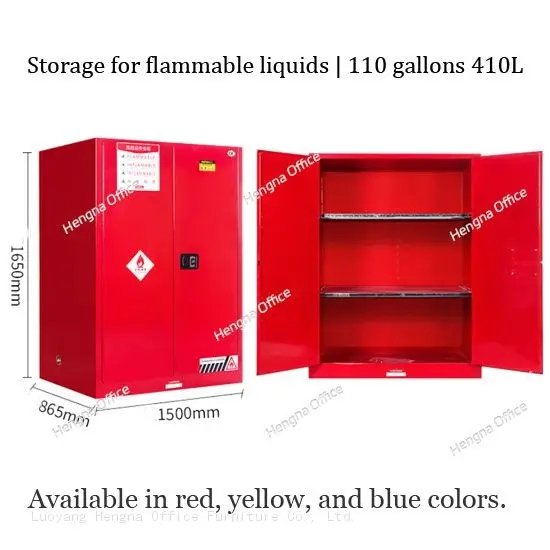
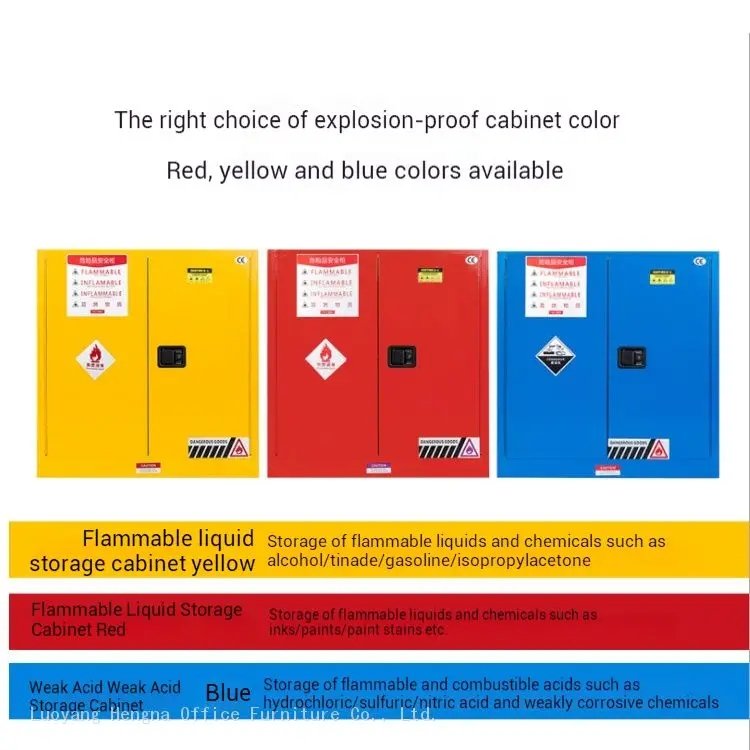
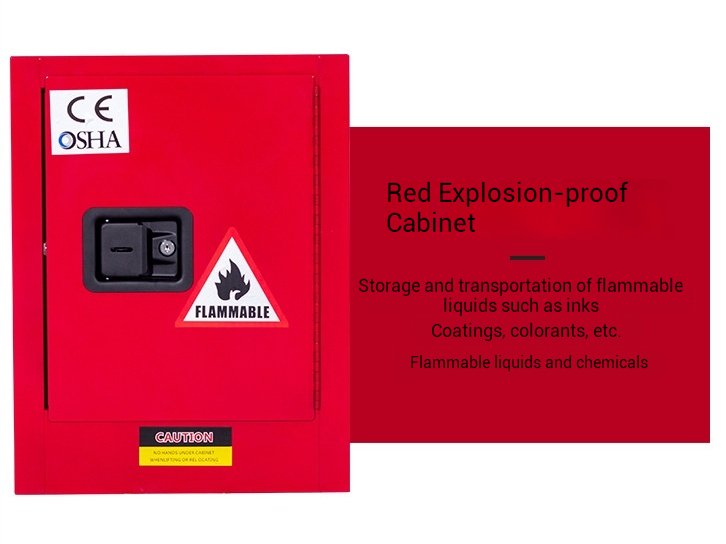
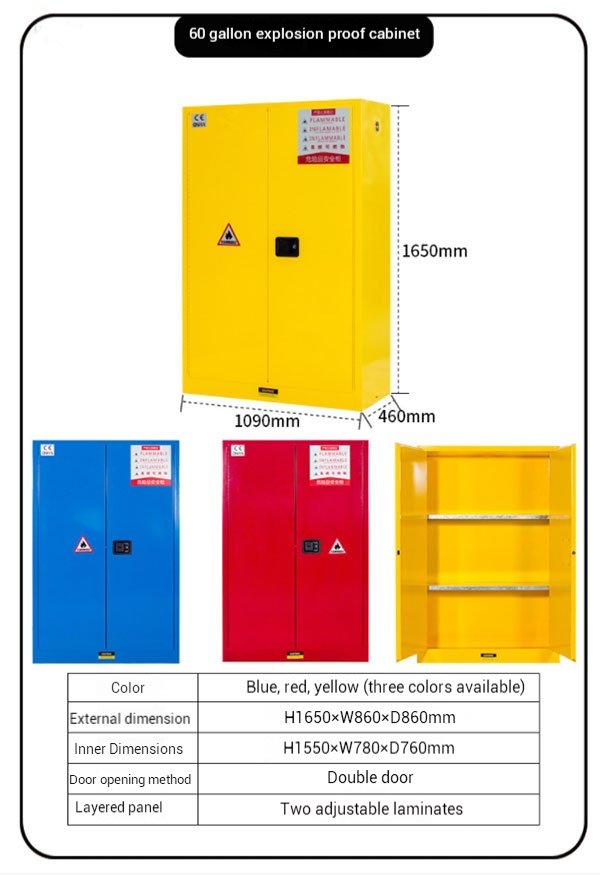
Walk them over to the yellow cabinet. First thing they look at: the yellow stripe and the “FLAMMABLE — KEEP FIRE AWAY” wording on the front. OSHA requires the cabinet to be conspicuously labeled. A plain gray cabinet with a handwritten sign doesn’t pass.
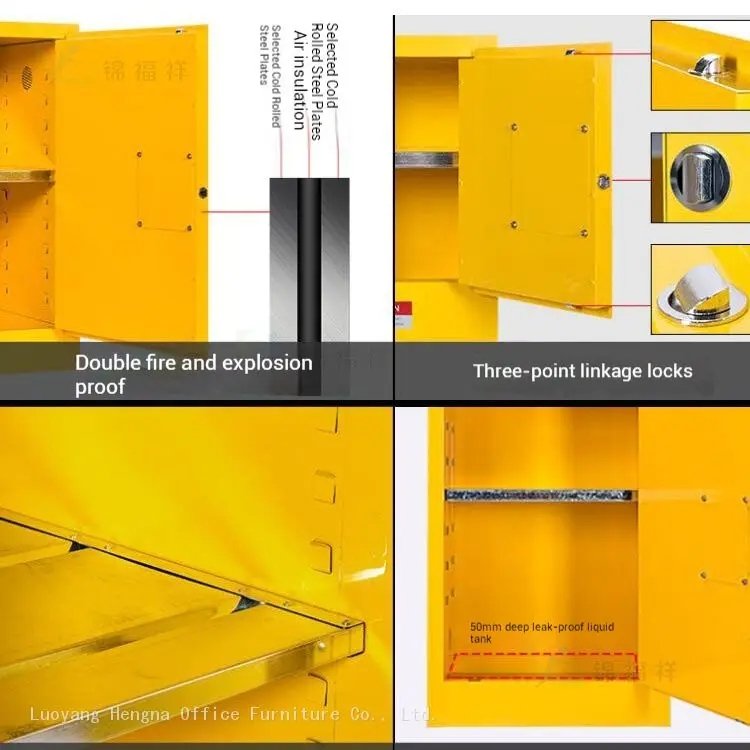
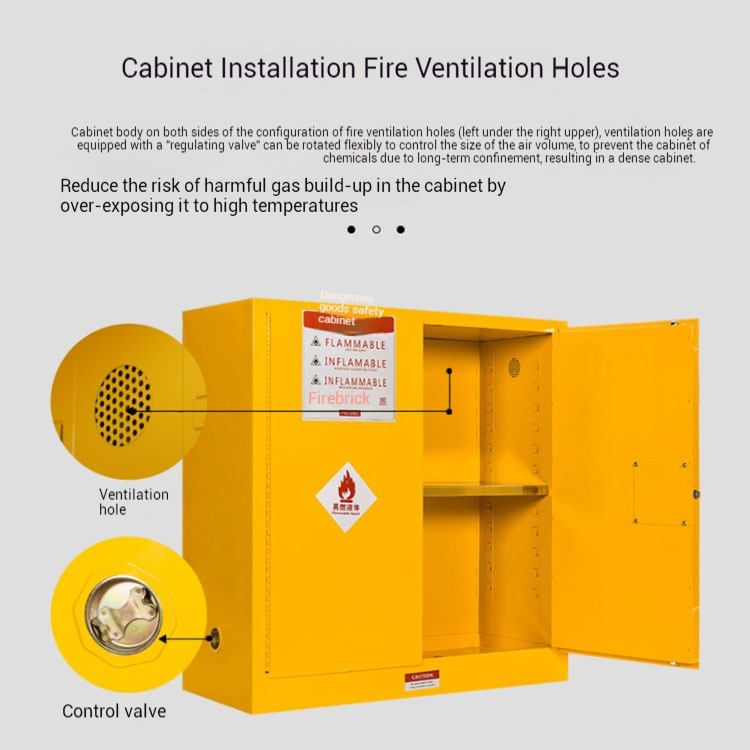
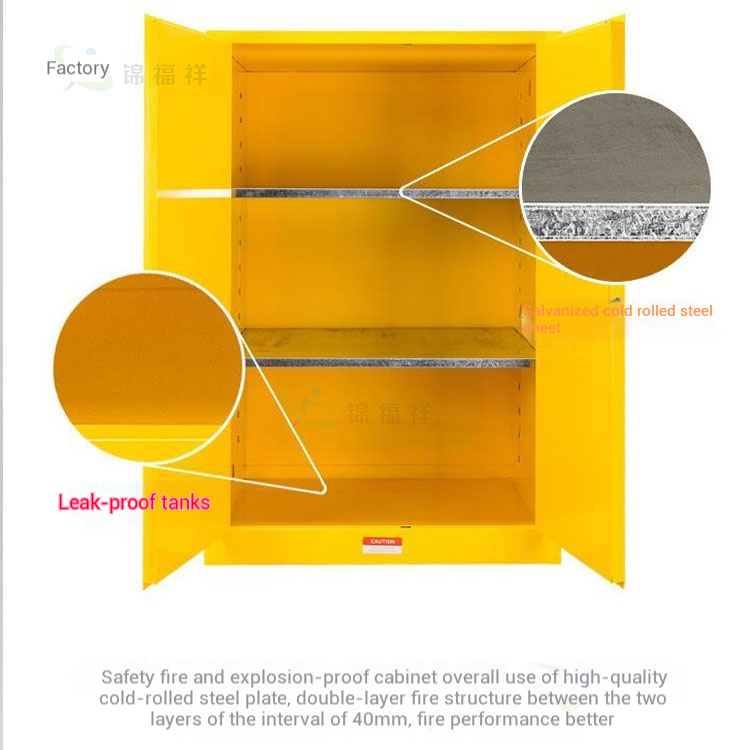
Then they look at the construction. A compliant cabinet is double-walled with a 1/2-inch air gap, has a 1,000–1,200 BTU/hour fire rating for 30 minutes, and the door self-closes when you let go. If your cabinet is a single sheet of steel with a shelf thrown in, that’s a citation waiting to happen.
Step 3: They Open the Door and Look Inside
This is where most shops get tripped up. The officer opens the door and checks three things:
- Is there a leak-proof sill? The bottom 1 inch of the cabinet must form a liquid-tight catch basin. If a can tips over, it doesn’t run out under the door.
- Are incompatible chemicals separated? Acetone next to concentrated nitric acid is a reaction, not a storage plan. Shelf dividers or separate cabinets are the fix.
- Is anything non-chemical in there? Food, drinks, personal bags, and cigarettes do not belong in a flammable cabinet. If the officer sees a lunchbox, they’ll write it up.
Step 4: They Notice What’s Around the Cabinet
A compliant cabinet isn’t enough on its own. The officer glances at the surroundings:
- 18 inches of clearance above for sprinkler systems (unless the cabinet is sprinkler-protected).
- No combustibles stacked on top — cardboard boxes, rags, paper stock.
- The cabinet is anchored or heavy enough that it can’t tip when a drawer is pulled open.
Step 5: They Ask About the Recordkeeping
Last question before they leave: “Show me your SDS binder and your monthly inspection log.” Most shops have the SDS. The inspection log — a dated note that someone checked the cabinet, closed the door, and verified no leaks — is what separates shops that pass from shops that don’t.
What the Ticket Usually Looks Like
A first-offense flammable storage citation runs $1,000–$3,000 per violation, and OSHA lists specific standard (1910.106) first on the ticket. Fixing it properly — a real 15-gallon FM-approved cabinet, correctly placed, with a log — costs less than one citation. The shops that get through inspection without a ticket usually made this decision a year before the officer knocked.
If your shop also stores acids or caustics, those don’t belong in a flammable cabinet — see our guide on PP corrosive storage cabinets for acids and alkalis.
If your shop’s flammable storage has been flagged — or you’re just tired of guessing what the inspector will flag next — send us your shop layout. We’ll spec the right size cabinet and make sure it’s the one that passes the next walkthrough, not the one that gets a ticket.