Stop reading this for 30 seconds. Walk over to your reagent shelf and make a list of everything on it. Hydrochloric acid. Sodium hydroxide. Acetone. Methanol. Silver nitrate. Hydrogen peroxide. That list is the only thing that determines what cabinet you actually need.
Most people buy a corrosive cabinet based on what the sales rep recommended. Then they discover they’ve put the wrong chemicals in the wrong cabinet. Here’s how to take your list and walk it through, branch by branch.
Branch 1: Anything Acidic — HCl, H₂SO₄, HNO₃, Acetic
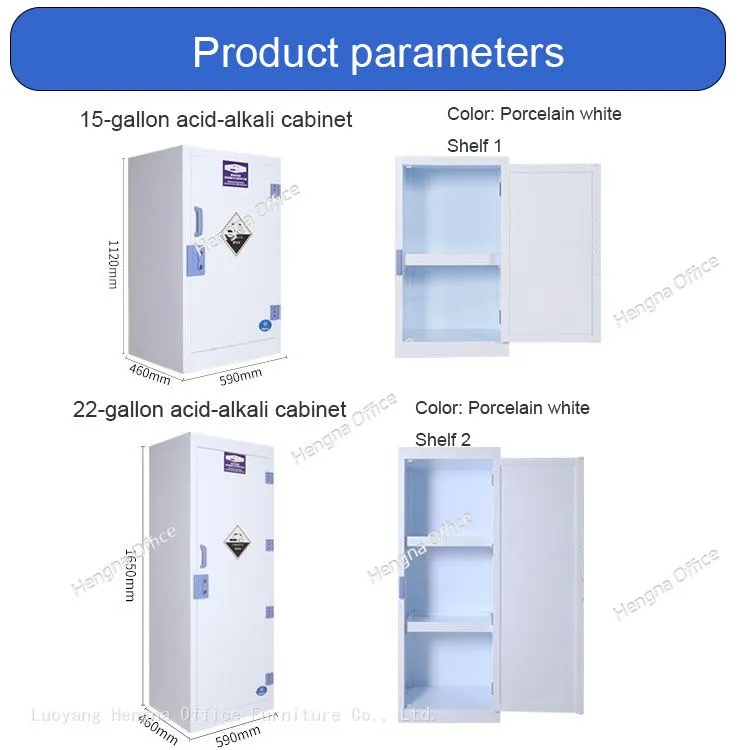
If your list has concentrated mineral acids, you need a polypropylene (PP) cabinet, not a steel flammable cabinet. Steel reacts. Even powder-coated steel will rust through where an acid fume condensate settles on the shelf edge, and you’ll see it as orange streaks within 18 months.
PP shrugs off these acids. One-piece welded body, adjustable PP shelves, 25 mm leak-proof sump. Done.
Branch 2: Anything Basic — NaOH, KOH, Ammonia
Bases also go in a PP cabinet. But here’s the branch most people miss: acids and bases need a divider between them, or a second cabinet. Concentrated HCl next to concentrated NaOH is a neutralization reaction waiting for a spill to trigger it. A polyethylene divider on the shelf handles small setups; a second cabinet handles real labs.
Branch 3: Flammable Solvents — Acetone, Methanol, Ethanol, Xylene
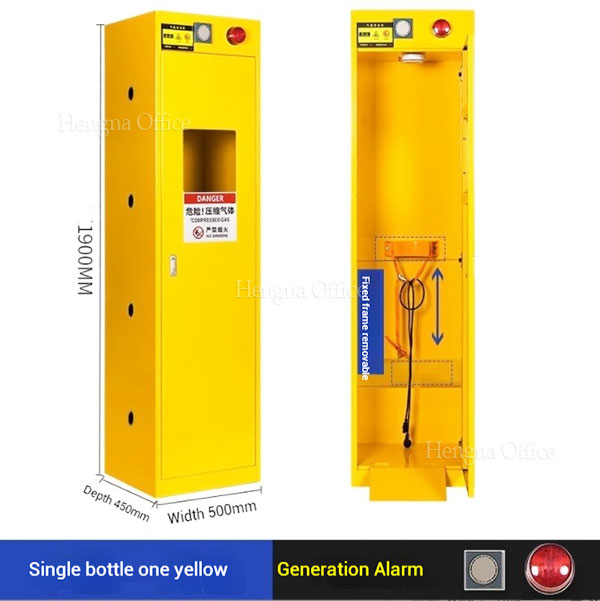
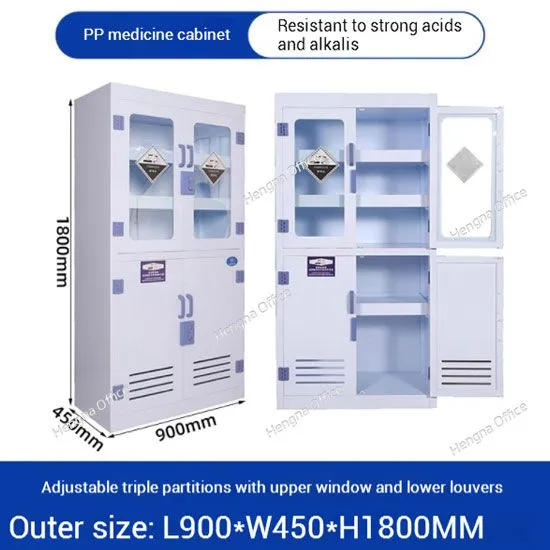
These do not go in the PP cabinet. They go in a steel flammable cabinet — yellow, self-closing, double-walled, with a leak-proof sill. The reason isn’t the plastic; it’s the fire rating. PP is combustible, and a cabinet rated for corrosives isn’t rated for a solvent flash fire.
Rule of thumb: if it’s a solvent that evaporates fast, it’s a flammable cabinet question. If it’s a bottle of concentrated acid or caustic, it’s a PP cabinet question. They are not interchangeable.
Branch 4: Strong Oxidizers — H₂O₂, Nitric Acid, Permanganates
Nitric acid sits at the weird intersection: it’s an acid (so PP-friendly) and an oxidizer (so it can’t sit next to organics). If your list has concentrated HNO₃ or 30%+ hydrogen peroxide, they go in a separate vented PP cabinet, not mixed with the rest. Duct the vent to exhaust — concentrated nitric acid outgasses.
Putting Your List Together
| On your list | Cabinet type | Notes |
|---|---|---|
| HCl, H₂SO₄, acetic acid | PP cabinet | Welded body, 25 mm sump |
| NaOH, KOH, ammonia | PP cabinet | Divide from acids |
| Acetone, methanol, ethanol, xylene | Steel flammable cabinet | Yellow, self-closing |
| Concentrated HNO₃, H₂O₂ 30%+ | Vented PP cabinet | Duct to exhaust, separate from organics |
| Photographic developers, salts | PP cabinet | Often overlooked, still corrosive |
If Your List Fits Half a Cabinet
Most small labs end up needing two cabinets: one PP for acids and bases, one yellow steel for solvents. That’s not overbuying — that’s the minimum that matches the chemical reality. Buying one cabinet that tries to do both is how you end up with a rusted shelf next to a solvent can.
The solvents on your list — acetone, methanol, xylene — go in a steel flammable cabinet, not a PP one. Our 15-gallon flammable storage cabinet walkthrough covers that side of the lab.
Bring us your reagent list. We’ll tell you which bottles go in a PP cabinet, which need a steel flammable cabinet, and which need to be physically separated. No generic quote — just a match to what you actually store.