“Should I buy a rolling tool cabinet or a stationary workbench?” is the wrong question. It’s like asking “should I buy a sedan or a pickup” without saying what you’re hauling. The right answer depends on the garage.
Here are three garages we’ve actually spec’d storage for. Three different buildings, three different answers. Yours is probably one of them.
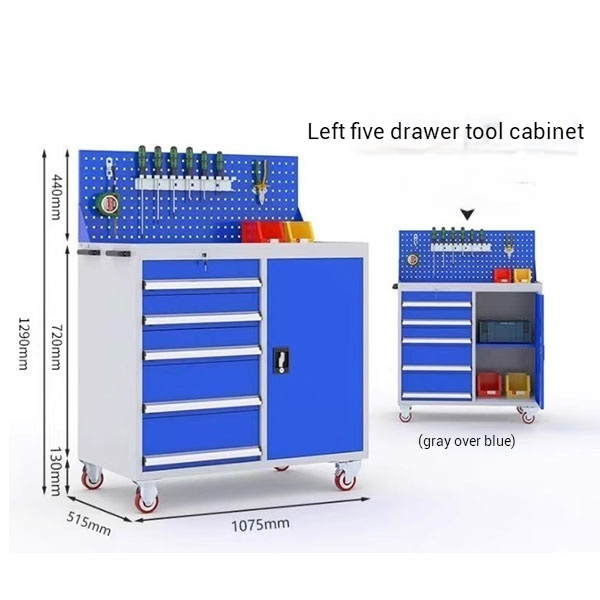
Case 1: The Single-Car Garage That Doubles as Parking
Mark has a 20′ × 20′ garage in a suburb. He parks his Honda in it at night. On weekends, he pulls the car out and works on his motorcycle on the driveway. He has about 6 feet of wall on one side that’s not blocked by the water heater or the freezer.
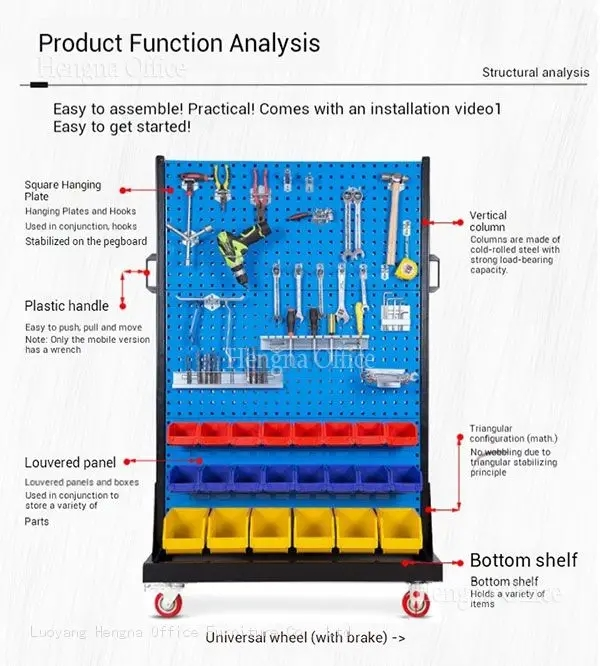
What he bought: a 5-drawer rolling cabinet on casters, 42 inches wide. On weekdays it tucks against the wall. On weekends he rolls it next to the motorcycle on the driveway. No bolting, no permanent footprint, no work surface to speak of — he uses a folding table when he needs one.
Stationary bench was wrong here: he’d lose parking for a work surface he only uses 8 hours a month.
Case 2: The Two-Car Family Garage
The Wongs have a 24′ × 26′ attached garage. Two cars park inside, but there’s a 10-foot deep strip along the back wall that doesn’t block either parking space. Mr. Wong does woodworking — cutting boards, a cabinet for the kitchen, the occasional birdhouse. He uses a router, a circular saw, and a clamp-heavy workflow.
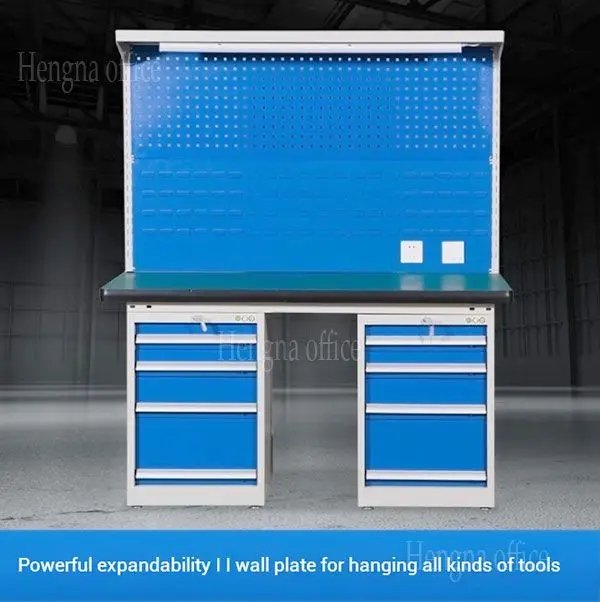
What they bought: a stationary 6-foot workbench bolted to the back wall, with a 1.75-inch solid wood top, a 6″ vise, and an upper cabinet for hand tools. Next to it, a smaller 3-drawer rolling cart that carries the power tools to wherever he’s cutting. The bench stays put. The cart rolls.
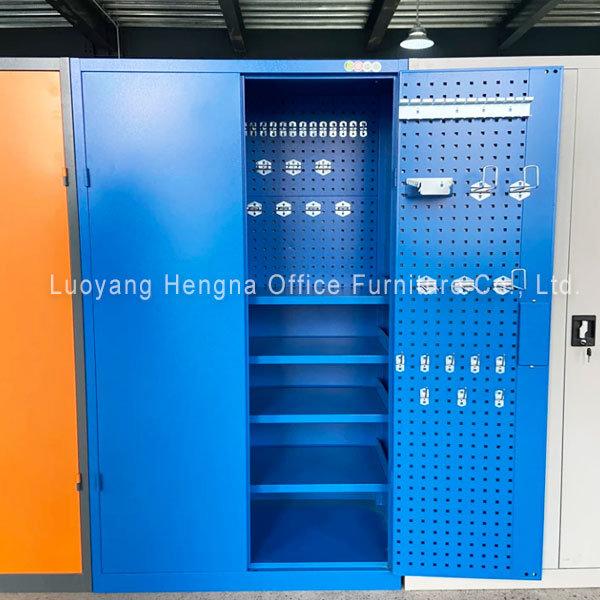
Case 3: The Commercial Shop Bay
A local auto repair shop has three bays. Each bay gets a heavy-duty stationary tool chest bolted to the floor — 10 drawers, 600-lb load rating, with a pegboard wall above it for the frequently-used sockets. The rolling cart in this shop isn’t for tools; it’s for moving parts and oil drain pans between bays.
What they bought: no rolling tool cabinets at all. The work is heavy, repetitive, and fixed in location. A rolling chest would walk when a mechanic cranks on a rusted bolt, and the 800 lbs of tools in it would be a liability.
Which Garage Is Yours?
- If your garage is a parking space first and a workshop second — start with the rolling cabinet. You can always add a wall bench later.
- If you have a dedicated strip that doesn’t block parking, and you do repetitive bench work — bolt down the stationary bench, add a small rolling cart for mobile tools.
- If you’re running a business out of the space, and tools weigh hundreds of pounds — go stationary. Rolling is for tools you move, not tools you work under.
If your shop outgrew the tool chest and now you’re drowning in boxes of parts and paper records, mobile archive shelving is the next upgrade most small shops need.
Not sure which garage type you are? Send us a photo of your space and a list of the tools you reach for every week. We’ll tell you honestly if you need a rolling cart, a bolted-down bench, or both — we’d rather size it right on the first order than come back later.