Why Tool Management is the Unsung Hero of Operational Excellence
In the world of manufacturing and industrial operations, conversations often revolve around complex automation, supply chain optimization, and sophisticated enterprise resource planning (ERP) systems. Yet, the true bedrock of efficiency, the principle that underpins success in every modern factory, remains surprisingly simple: orderly tool management.
This concept is not just about keeping a tidy workspace; it is the fundamental starting point for any organization striving for Lean Manufacturing.
If you’ve ever watched a technician spend five minutes searching for the right wrench, or seen a shift wasted because a critical measuring instrument was misplaced, you’ve witnessed firsthand the hidden costs of poor organization. These seemingly minor frustrations accumulate, forming major obstacles to productivity, quality, and profit.
This blog post will delve into why a meticulous approach to tool management is not just a best practice, but the essential first step in your journey toward a truly lean and optimized operation, using a specific type of industrial storage as a practical example.
The Hidden Costs of Disorganized Tools
Before we explore the solution, we must clearly define the problem. Disorganization introduces what Lean Manufacturing identifies as “The Seven Wastes” (Muda), specifically targeting two major culprits:
| Lean Waste (Muda) | Impact of Disorganized Tools | Cost to the Operation |
| Motion | Excess walking, bending, and searching for tools. | Worker fatigue, increased time per task. |
| Waiting | Operators waiting for shared tools or for replacements for lost items. | Bottlenecks, decreased machine utilization, idle labor. |
| Defects | Using the wrong or a damaged tool because the correct one cannot be found. | Product quality issues, rework, scrap material, customer complaints. |
The “Search Time Tax”: Consider a facility with 20 technicians, each losing an average of 10 minutes per shift searching for tools. That’s 200 minutes of lost productivity daily—over 80 hours a month, equivalent to one full-time employee doing nothing but searching. This “Search Time Tax” is pure, unrecoverable waste.
5S: The Essential Framework for Tool Management
The most effective system for establishing order is 5S, a methodology derived from Japanese Lean principles. It is the practical toolkit for achieving visual management and setting the stage for all subsequent Lean activities.
The 5S principles, when applied rigorously to Tool Management, transform a chaotic environment into a streamlined workspace:
- Seiri (Sort): Remove all unnecessary items from the tool area. Keep only the tools required for the current job. Action: Discard broken or redundant tools.
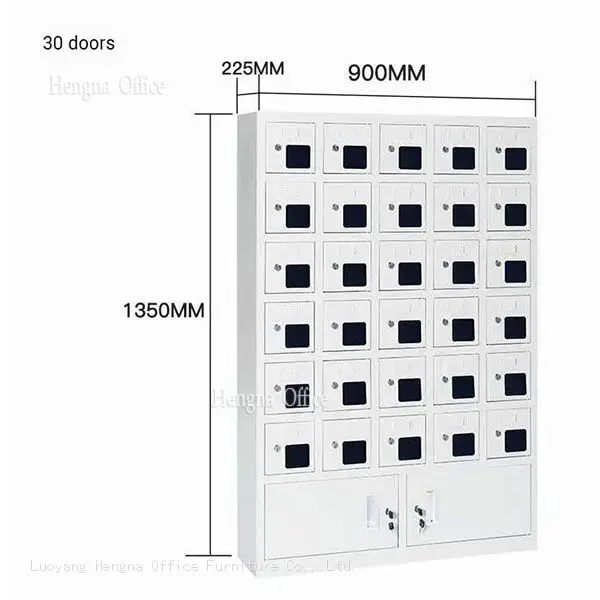
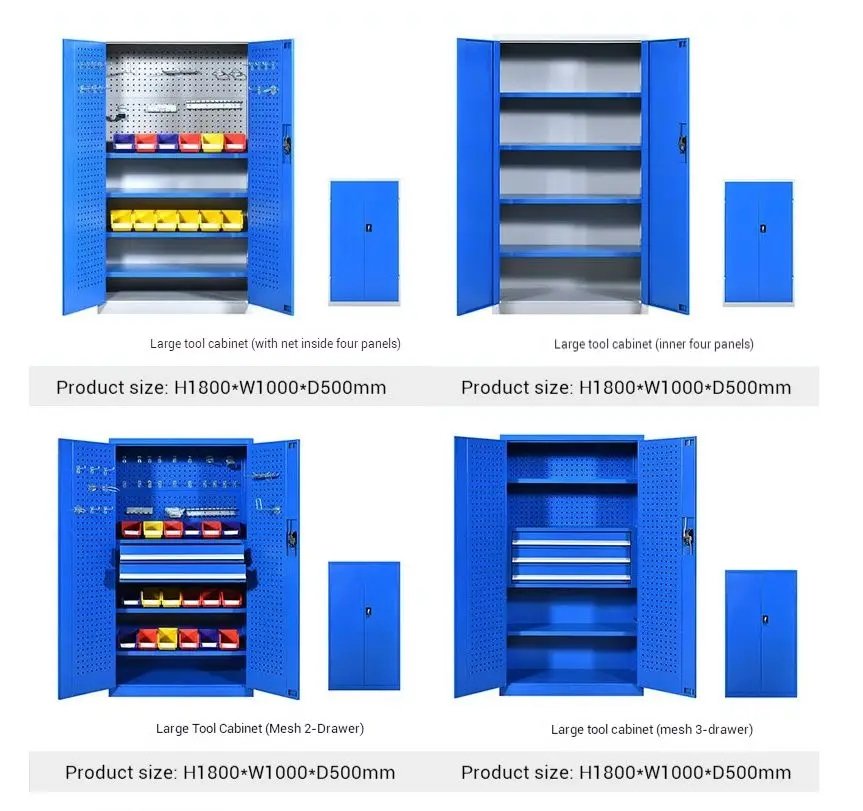
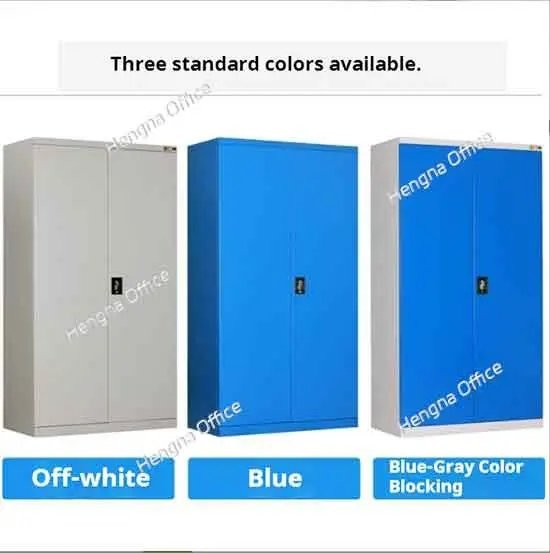
- Seiton (Set in Order): Arrange all necessary items for easy access, ensuring every item has a specific place. Action: Use shadow boards, labels, and specialized cabinets (like the ones shown in the images) to create a designated location for every tool.
- Seiso (Shine): Clean the workspace and tools. This is also an inspection opportunity to detect abnormalities like leaks or damage. Action: Clean tools and cabinets regularly.
- Seiketsu (Standardize): Create standards and procedures to maintain the first three S’s. Action: Establish clear rules on tool check-out/check-in, cleaning schedules, and cabinet organization.
- Shitsuke (Sustain): Make 5S a habit. The most difficult step—ensuring everyone follows the standards over time. Action: Conduct regular, documented audits and provide ongoing training.
The Role of Modern Industrial Tool Cabinets
To successfully implement the ‘Set in Order’ (Seiton) phase of 5S, the right tool management solution is paramount. Modern, heavy-duty industrial tool cabinets are engineered specifically to facilitate Lean principles and visual management.
Let’s look at the features that transform a simple cabinet into a Lean asset, referencing the images provided:
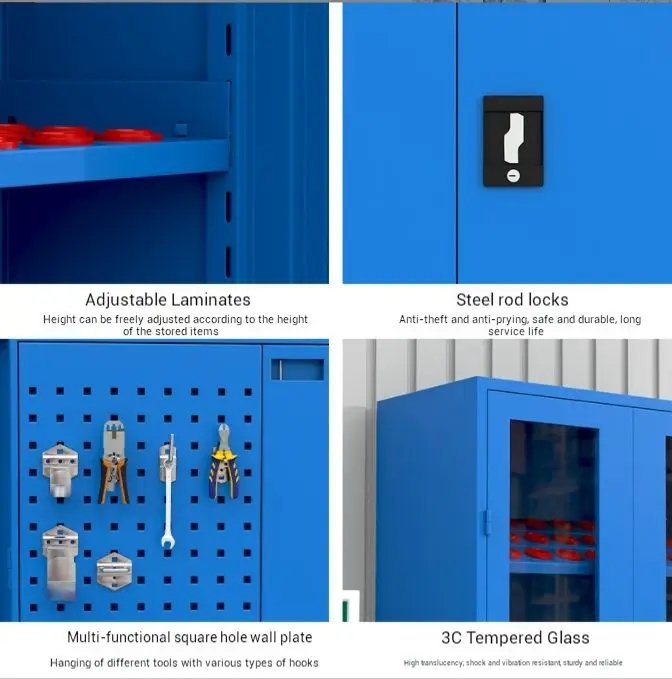
1. Multi-Functional Square Hole Wall Plate (Pegboards)
- Feature: These perforated internal panels, often seen on the cabinet doors or back walls, are specifically designed to accept various hooks and tool holders.
- Lean Benefit: This facilitates Shadow Boarding. By tracing the outline of a tool onto the pegboard, it instantly creates a visual cue for where the tool belongs. A glance immediately reveals if a tool is missing—a cornerstone of visual management.
- Example: Hanging wrenches, pliers, and power tools on the pegboard ensures they are accessible and immediately accounted for.
2. Adjustable Laminates (Shelves)
- Feature: The height of the interior shelves can be easily adjusted using a vertical railing system.
- Lean Benefit: Maximum Space Utilization. The flexibility allows the cabinet to be reconfigured to perfectly accommodate the height of stored items, minimizing wasted vertical space and eliminating the need for separate, bulky storage units.
3. Integrated Tool Management Solutions (Drawers and Bins)
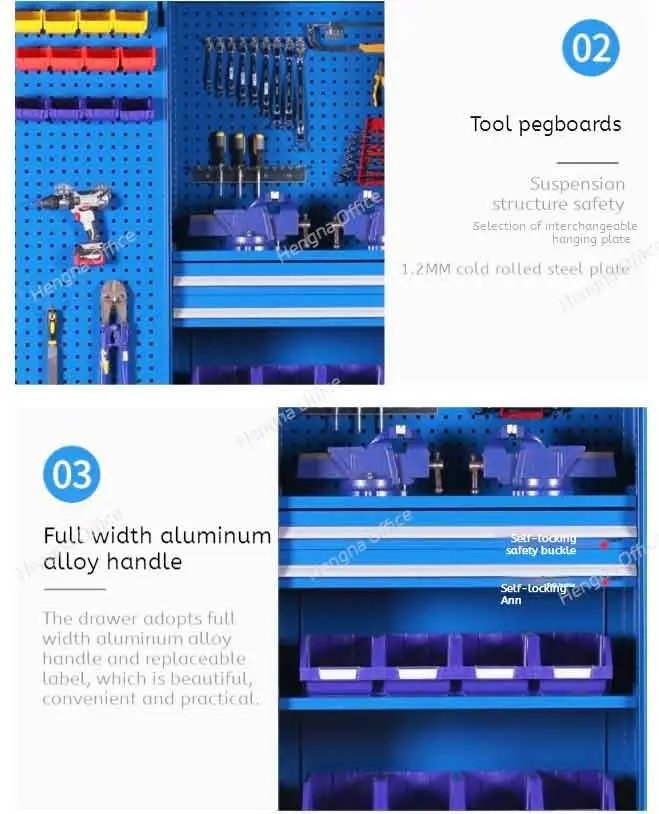
- Feature: Cabinets are often equipped with drawers (2-drawer, 3-drawer models) and storage bins (yellow/red/purple tubs) placed on shelves.
- Lean Benefit:Point-of-Use Storage and Batch Reduction.
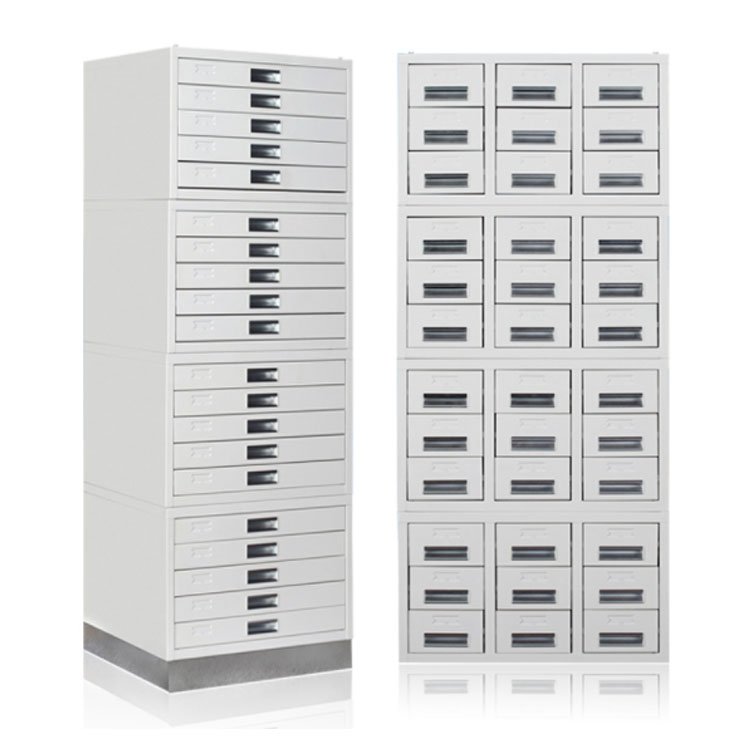
- Drawers are ideal for smaller, more specialized tools, protecting them from dust and damage. They often feature full-width aluminum alloy handles for easy, quick access, and may include self-locking safety buckles to prevent accidental opening.
- Storage Bins (or pick bins) are perfect for small parts, fasteners, and consumables. Color-coding (e.g., yellow for screws, red for bolts) aids in quick identification, reducing the time spent searching for material.
4. Security and Durability
- Feature: Heavy-duty construction (e.g., 1.2MM cold rolled steel plate) and steel rod locks. Some models feature 3C Tempered Glass doors.
- Lean Benefit:Protection of Assets and Safety.
- Durability means the cabinet is a long-term investment, resisting the wear and tear of an industrial environment.
- Security protects high-value tools and calibrated instruments, ensuring they are only used and returned by authorized personnel, which prevents loss and maintains calibration integrity. The tempered glass option offers visual management while maintaining security.
Implementing Your Orderly Tool Management System
A successful tool management goes beyond buying a cabinet; it requires a structured approach.
Step-by-Step Tool Management Guide
- Audit Current State: Document the locations and usage frequency of all tools. Identify the 20% of tools that cause 80% of the lost time (Pareto Principle).
- Design the Layout (Seiton): For the new cabinets:
- Place frequently used tools on the doors and at waist level.
- Use drawers for precision instruments.
- Use bins for bulk parts, ensuring the bins are clearly labeled.
- Create Visual Standards: Implement shadow boards on the pegboards. Use color-coding for departments or specific machine tools.
- Establish Check-Out/In Protocol (Seiketsu): Implement a simple system (digital or paper-based) where technicians sign out a tool and sign it back in. This creates accountability and immediately flags missing items.
- Train and Motivate (Shitsuke): Conduct thorough training on the new system. Explain why the change is necessary (reduced frustration, increased productivity). Empower operators to take ownership of their area.
The Payoff: Beyond Tool Management
When tool management is perfected, the benefits cascade across the entire manufacturing floor:
- Improved Safety: A clean, organized environment with no misplaced tools or tripping hazards is inherently safer.
- Increased Quality: Only the correct, calibrated, and undamaged tools are used, drastically reducing product defects and rework.
- Faster Changeovers (SMED): By having all necessary tools and jigs organized and immediately available, the time required to switch a production line from one product to another is dramatically reduced.
- Enhanced Employee Morale: Reducing daily frustrations associated with searching for items leads to a more positive and productive workforce.
Orderly tool management is not a minor housekeeping task; it is the catalyst for a Lean transformation. By committing to the foundational principles of 5S and investing in appropriate, purpose-built storage like these industrial tool cabinets, organizations lay the groundwork for continuous improvement and sustainable operational excellence.
Start with the basics, conquer the chaos, and the advanced efficiencies of Lean Manufacturing will follow naturally.