Single-Sided vs. Double-Sided Tool Rack: The Critical Choice for Workshop Efficiency
In the drive for operational excellence, the seemingly simple question of where and how to store tools and materials can have a monumental impact on productivity and profit. The choice between a single-sided, wall-mounted or fixed rack and a double-sided, mobile access unit is a fundamental decision that dictates the flow, safety, and efficiency of your entire workspace.
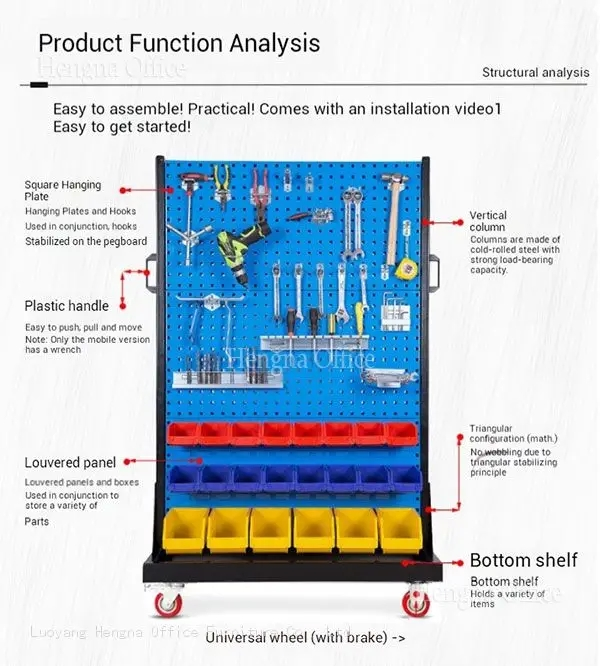
This decision moves tools from passive storage to active, functional assets. A poorly placed rack can create bottlenecks and increase search time, while an optimized layout—like those using specialized pegboard and louvered panel racks shown here—can become a central pillar of your Lean Manufacturing efforts.
This guide will break down the pros, cons, ideal use cases, and structural considerations for both single-sided and double-sided tool rack layouts, helping you select the perfect configuration for your specific operational needs.
🛠️ The Single-Sided Tool Rack: The Wall Hugger
The single-sided rack is the classic choice, designed to sit flush against a wall or to act as a permanent fixture within a defined area.
Key Characteristics and Dimensions
- Configuration: The tool hanging surface is on one side only.
- Mobility: Often comes as a fixed unit, standing on anchor feet.
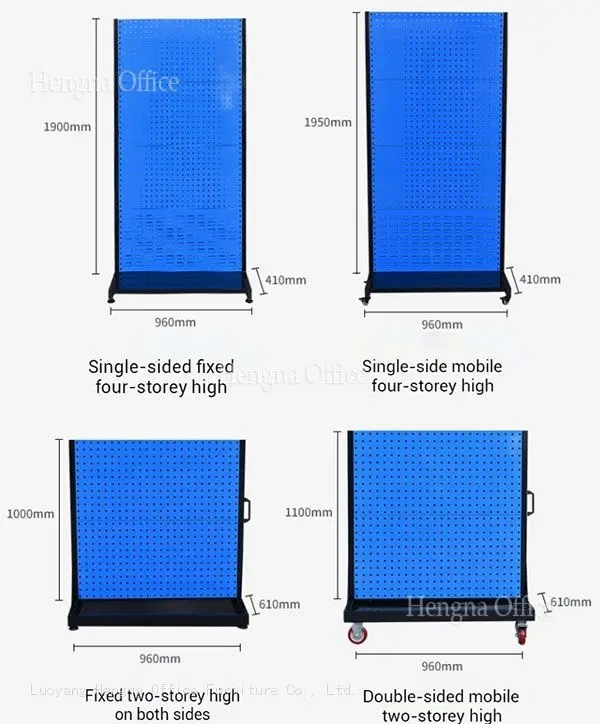
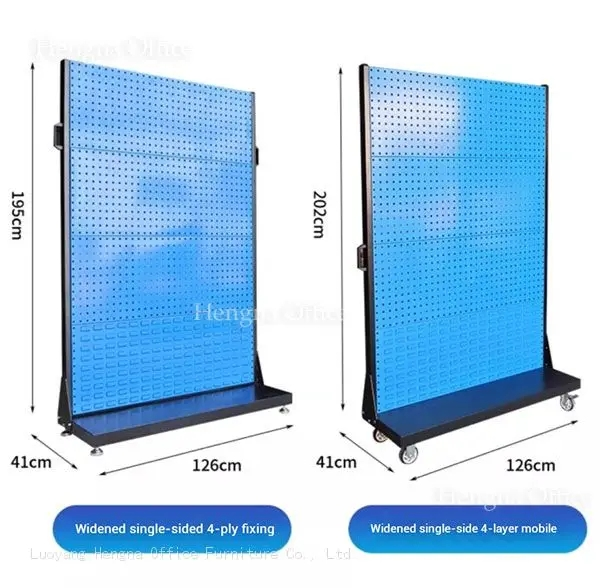
- Typical Dimensions: Available in various sizes, such as a Single-sided fixed four-storey high unit measuring 1900mm high, 960mm wide, with a base depth of 410mm. Other models may be 190cm high and 96cm wide.
🟢 Pros of Single-Sided Tool Rack
- Space Saving: Maximizes floor space by utilizing vertical wall space. This is ideal for smaller workshops or areas with limited floor availability.
- Clear Visual Management: When positioned against a well-lit wall, the rack offers excellent visual control. The shadow-boarded tools are immediately visible from the workbench area.
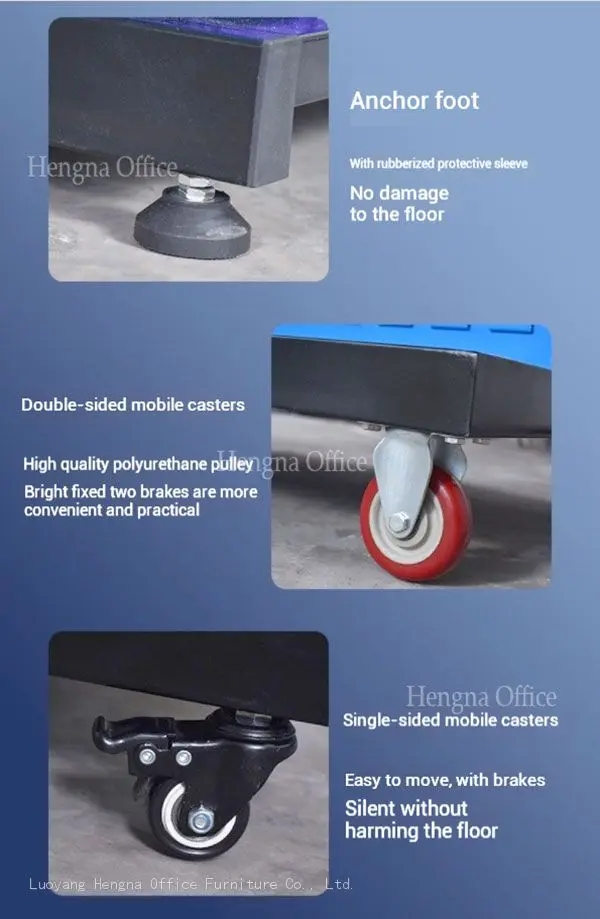
- Security and Control: Being fixed and often near a workstation, it promotes Point-of-Use Storage, ensuring tools are used and returned immediately to the designated area. Fixed versions often utilize Anchor feet for stability and floor protection.
- Safety: Keeps walkways and central areas clear by moving storage to the perimeter.
🔴 Cons of Single-Sided Tool Rack
- Limited Access: Only one operator can comfortably access the tools at a time.
- Scalability: Difficult to expand capacity without sacrificing more wall space or moving to a higher, less accessible rack.
- Immobile: Fixed units cannot be easily moved to support changing production lines or workstations.
🎯 Ideal Use Cases
- Dedicated Workstations: Perfect for individual mechanic bays, welding stations, or quality control benches where only one person or small team needs specific tools.
- Perimeter Storage: Used along the walls of a facility to store less frequently accessed tools or specialty equipment.
- Storage of Heavy/Large Items: The fixed structure provides high stability for heavy tools (like large hammers or clamps) that require secure mounting.
🔄 The Double-Sided Tool Rack: The Workflow Hub
The double-sided rack is designed to be a free-standing partition, allowing tools to be stored and accessed from both sides. The mobile versions are particularly valuable for dynamic environments.
Key Characteristics and Dimensions
- Configuration: The tool hanging surface is on both sides of the unit.
- Mobility: Typically designed as a mobile unit, standing on Universal wheels (with brake) or Double-sided mobile casters.
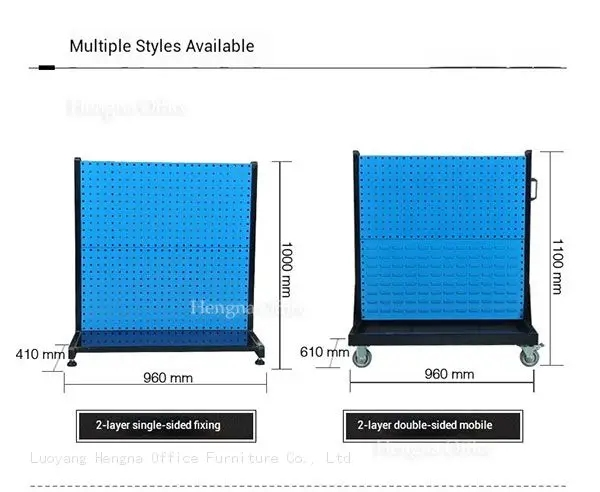
- Typical Dimensions: A Double-sided mobile two-storey high unit measures 1100mm high and 960mm wide, with a base depth of 610mm. Higher models are also available, often featuring handles for easy pushing and pulling.
🟢 Pros of Double-Sided Tool Rack
- Maximum Density: Offers double the storage capacity per square foot of floor space compared to single-sided units.
- Multi-User Access: Allows multiple operators to access tools and parts simultaneously without interfering with each other—a major boost to team productivity.
- Flexibility (Mobile Version): The wheels (often high-quality polyurethane casters with fixed brakes) allow the rack to be moved quickly to different assembly lines, maintenance areas, or cells as needed.
- Workflow Design: Can be used to create temporary work cells or to separate different areas of the shop floor, acting as a functional partition.
- Integrated Storage: Ideal for holding bulk parts in Louvered panels and boxes (like the red, blue, and yellow bins shown) on the bottom, while tools are hung above.
🔴 Cons of Double-Sided Tool Rack
- Floor Space: Requires clear access around the entire unit, consuming more central floor space.
- Visibility: Tools on one side are not visible to operators on the opposite side, which can slightly complicate inventory checks.
- Safety (Mobile): While designed with a Triangular configuration for stability to prevent wobbling, mobile units require brakes to be engaged when in use to prevent movement.
🎯 Ideal Use Cases
- Flexible Assembly Lines: Perfect for manufacturing environments that frequently reconfigure their layout (e.g., cell manufacturing).
- Shared Tool Cribs: Functions as a central “mini-crib” accessible by multiple teams or adjacent workstations.
- Maintenance Carts: The mobile version serves as a comprehensive tool and parts cart for traveling maintenance teams within a large facility.
📐 Layout Selection Matrix: Making the Right Choice
To determine the best rack layout, use this quick matrix based on your core operational requirements:
| Requirement Category | Single-Sided Tool Rack (Fixed) | Double-Sided Tool Rack (Mobile) |
| Space Constraint | High (Small Workshop/Narrow Aisle) | Low (Open Floor Plan) |
| Tool Accessibility | Single-User/Dedicated Area | Multi-User/Shared Access |
| Workflow Change | Infrequent/Static | Frequent/Dynamic (Cell Mfg.) |
| Tool Weight | Heavy (Excellent Stability) | Moderate (Mobility is Key) |
| Emphasis | Order & Security (Perimeter) | Flow & Flexibility (Center) |
💡 The Hybrid Approach
Many facilities use a hybrid system:
- Single-Sided Tool Rack line the perimeter walls for heavy, rarely-moved, or standardized tools.
- Double-Sided Mobile Tool Racks are used in the center of the floor, creating flexible work cells containing small parts, consumables, and high-turnover assembly tools.
Structural Features that Drive Efficiency
Regardless of the layout, look for key structural features that enhance the Lean environment:
- Vertical Column: Columns made of cold-rolled steel with strong load-bearing capacity ensure the rack remains stable even when fully loaded with tools and parts.
- Square Hanging Plate: The pegboard design allows for tools to be hung using various hooks and plates, ensuring the system can be customized for shadow boarding.
- Louvered Panel: Designed to hold plastic storage bins (like the red, blue, and yellow varieties) used for parts and fasteners, making part retrieval just as organized as tool retrieval.
- Casters with Brakes: Essential for safety on mobile units. High-quality polyurethane casters should be used, with fixed brakes for convenient and practical use.
By carefully assessing your spatial constraints, your team’s workflow, and your need for flexibility, you can select the optimal tool rack layout. This decision is not just about storage; it’s about engineering a workspace that drives efficiency and supports continuous improvement, transforming your shop floor into a truly Lean operation.